
Biodiesel Plant for Sale

Looking for a reliable Biodiesel Plant for Sale for your commercial or industrial project? Veera Group manufactures biodiesel production systems designed to convert suitable feedstocks such as used cooking oil, vegetable oils, animal fats, and selected non-edible oils into renewable biodiesel.
Our biodiesel processing solutions are designed for different production requirements, helping businesses establish efficient waste-to-fuel operations. From selecting the right capacity to installation guidance and technical support, Veera Group provides solutions based on your feedstock, production goals, site conditions, and project requirements.
Turn Waste Oils Into Renewable Fuel
The growing demand for alternative fuels is creating opportunities for businesses to convert waste oils into renewable energy.
Veera Group’s Biodiesel Plant for Sale helps process suitable feedstocks such as used cooking oil into biodiesel while creating an additional value stream.

What Is a Biodiesel Production Plant?
A biodiesel production plant is an industrial processing system used to convert suitable oils and fats into biodiesel through a controlled chemical process known as transesterification.
The process generally involves preparing the oil, removing unwanted moisture and impurities, mixing the prepared feedstock with alcohol and catalyst, separating biodiesel from glycerine, and carrying out purification before storage.
Veera Group’s existing biodiesel systems are designed for different production scales, including the BD200 SC, BD500 SC, and BD1000 SC models.
A properly designed Biodiesel Plant for Sale should therefore be selected based not only on machine price, but also on feedstock type, processing capacity, automation requirements, available utilities, space, and expected production volume.
How Does a Biodiesel Plant Work?
The biodiesel production process can be divided into several important stages.
1. Feedstock Collection
Used cooking oil, vegetable oil, animal fat, and other suitable feedstocks are collected and prepared for processing.
The quality of the raw material directly affects the stability and efficiency of the production process.
2. Filtration and Pretreatment
The collected oil is filtered to remove food particles, solids, and other contaminants.
Depending on the feedstock, pretreatment may also be required to reduce moisture and prepare the oil for the conversion process.
3. Oil Heating
The prepared feedstock is heated under controlled operating conditions.
Controlled heating helps prepare the oil for the subsequent chemical reaction.
4. Transesterification
The prepared oil is reacted with alcohol and a suitable catalyst.
During this process, triglycerides are converted into biodiesel while glycerine is produced as a secondary product.
5. Separation
After the reaction, the biodiesel and glycerine phases are separated.
The separated biodiesel then moves through additional purification stages.
6. Purification
The biodiesel is processed to remove remaining impurities and unwanted components.
The specific purification configuration depends on feedstock characteristics and the required product quality.
7. Final Storage
After processing and quality checks, the finished biodiesel can be transferred to appropriate storage tanks for subsequent use or distribution.
EXPLORE OUR RANGE OF HIGH-PERFORMANCE Biodiesel Plant
EXPLORE OUR RANGE OF HIGH-PERFORMANCE
Biodiesel Plant
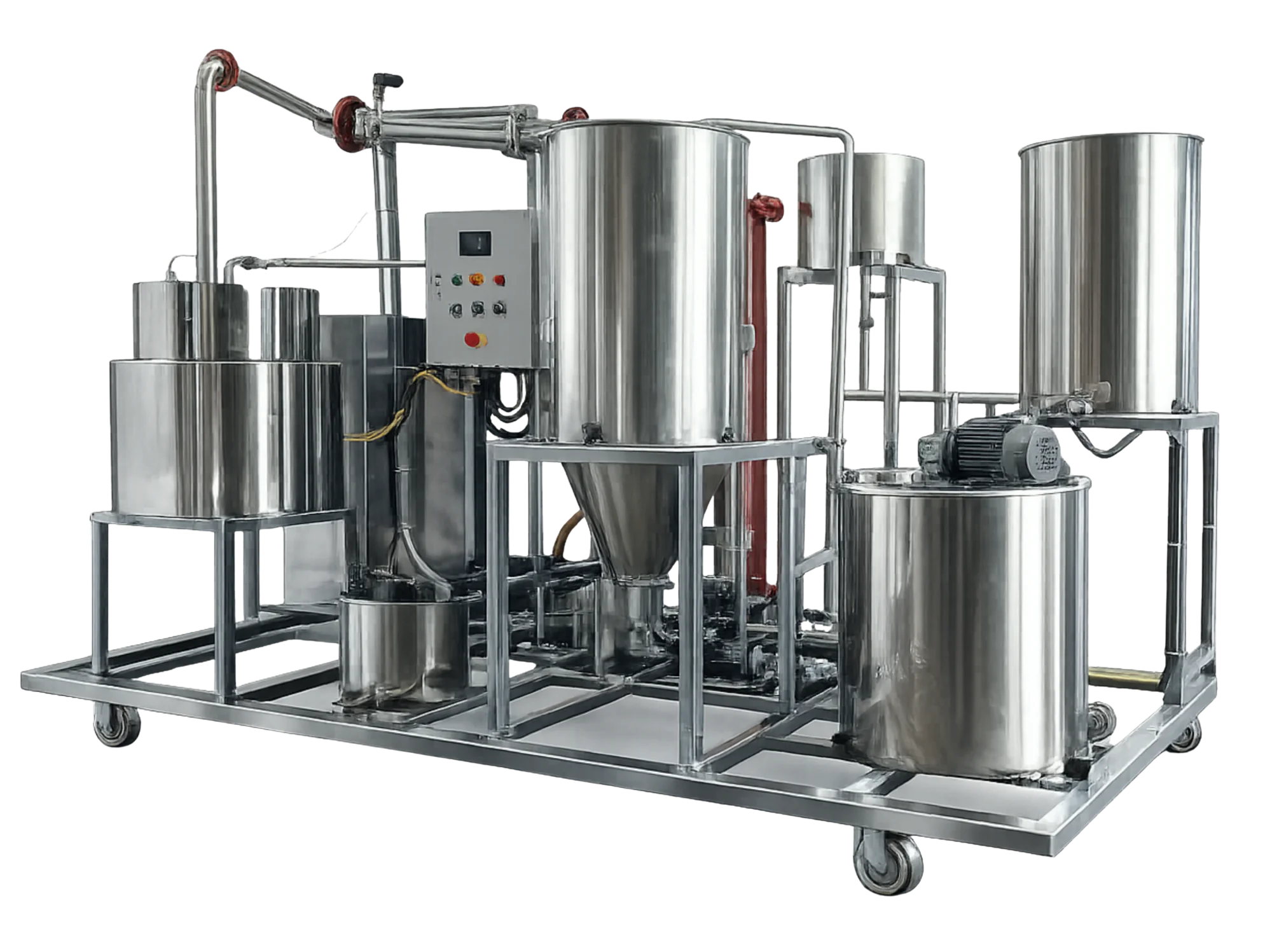
USED COOKING OIL
TO BIO DIESEL
Convert used cooking oil into high-performance biodiesel with 85-90% yield efficiency. Designed for restaurants, food industries and commercial kitchens. Backed by a 100% money-back guarantee.
Get a Quote


Choosing the Right Biodiesel Plant for Your Business
When evaluating a Biodiesel Plant for Sale, choosing the machine only by its advertised capacity is not enough.
Consider these factors before purchasing:
1. Available Feedstock
Determine how much used cooking oil, vegetable oil, animal fat, or other suitable feedstock is consistently available.
2. Required Production Capacity
Your plant capacity should match your available feedstock and expected market demand.
3. Feedstock Quality
Oil containing high moisture, impurities, or varying chemical characteristics may require additional pretreatment.
4. Automation Level
Choose between the appropriate level of automatic and semi-automatic operation based on your workforce and production requirements.
5. Available Utilities
Check electricity, heating requirements, water, storage, drainage, and other site requirements before installation.
6. Available Space
The plant layout should allow sufficient space for processing equipment, raw-material storage, finished biodiesel storage, chemical handling, and safe operator movement.
7. Local Regulations
Biodiesel production, storage, chemical handling, waste management, and fuel usage can be subject to local regulations. Always confirm the applicable requirements before establishing a commercial facility.
Feedstocks Suitable for Biodiesel Production
The performance of a biodiesel plant depends heavily on the characteristics of the incoming feedstock.
Used Cooking Oil
Used cooking oil from restaurants, hotels, commercial kitchens, and food-processing facilities can be collected and processed into biodiesel after appropriate preparation.
Vegetable Oils
Suitable vegetable oils can be used as feedstock depending on their chemical properties and the selected processing configuration.
Animal Fats
Certain animal fats can be processed when the plant is appropriately configured for the material.
Selected Non-Edible Oils
Some non-edible oils may also be suitable for biodiesel production depending on their properties and the intended process.
Before purchasing a Biodiesel Plant for Sale, feedstock availability and quality should be assessed because they directly influence plant configuration and operating requirements.
Biodiesel Plant Cost
The cost of a biodiesel production plant varies significantly depending on:
- Production capacity
- Machine configuration
- Automation level
- Feedstock characteristics
- Reactor size
- Heating system
- Purification configuration
- Storage requirements
- Auxiliary equipment
- Installation requirements
- Shipping and location
- Custom engineering requirements
For this reason, Veera Group can evaluate the project requirements and recommend a suitable configuration rather than providing a one-size-fits-all price.
Want the exact price?
Send Veera Group:
1. Required production capacity
2. Feedstock type
3. Country/location
4. Expected daily production
5. Automation preference
Our team can then recommend a suitable system and provide a project-specific quotation.
Why Veera Group?
Veera Group focuses on waste-to-energy and renewable-fuel technologies, including biodiesel processing, waste-oil recycling, biochar, biomass gasification, and related industrial systems.
Engineering-Focused Solutions
Veera Group designs systems around the customer’s feedstock, production requirements, and project objectives.
Multiple Production Capacities
The BD200 SC, BD500 SC, and BD1000 SC provide different production options for smaller through higher-capacity operations.
Technical Support
Project support can include capacity planning, system design, installation guidance, operator training, and technical assistance.
Global Project Support
Veera Group states that its waste-to-energy technologies serve customers across multiple international markets.
Customization
Biodiesel systems can be configured according to feedstock, capacity, site requirements, and project objectives.
Start Your Biodiesel Production Project with Veera Group
Whether you are planning a small biodiesel operation, expanding an existing waste-oil business, or developing an industrial renewable-fuel project, Veera Group can help you evaluate the appropriate production system.
From feedstock assessment and capacity selection to machine supply, installation guidance, and technical support, our team can help you plan your biodiesel project around your actual requirements.
If you are currently searching for a Biodiesel Plant for Sale, contact Veera Group with your required capacity, feedstock type, and location.
Get the right biodiesel production system for your project.
Ready to Start Your Biodiesel Production Business?
Turn suitable waste oils into a valuable renewable fuel with a professionally designed biodiesel production system.
Talk to Veera Group today about your Biodiesel Plant for Sale requirements.
FAQs
What is a Biodiesel Plant for Sale?
A Biodiesel Plant for Sale is a processing system designed to convert suitable oils and fats into biodiesel through controlled chemical and purification processes.
What feedstocks can be used?
Common feedstocks include used cooking oil, vegetable oils, animal fats, and selected non-edible oils, depending on their characteristics and the plant configuration.
What is the main process used to produce biodiesel?
The primary conversion process is transesterification, where suitable oils or fats react with alcohol and a catalyst to produce biodiesel and glycerine.
How do I choose the right biodiesel plant capacity?
Capacity should be selected according to available feedstock, expected production, investment level, available space, and market demand.
Can Veera Group supply biodiesel plants internationally?
Yes. Veera Group works with customers across international markets and can discuss project requirements based on the customer's country, feedstock, capacity, and site conditions.
BOOK A FREE CALL
Markeshwaran M│ Co-Founder & Technical SEO Lead │ Beyond Digital Marketing Agency
Markeshwaran specializes in industrial SEO, technical SEO, and B2B website optimization for manufacturing, renewable energy, and industrial businesses.
https://www.linkedin.com/in/markeshwaran-m-448777284/

 Waste Oil to Diesel Machine
 Biomass Gasifier