
BIODIESEL PROCESSING EQUIPMENT
BIODIESEL PROCESSING EQUIPMENT FOR USED COOKING OIL
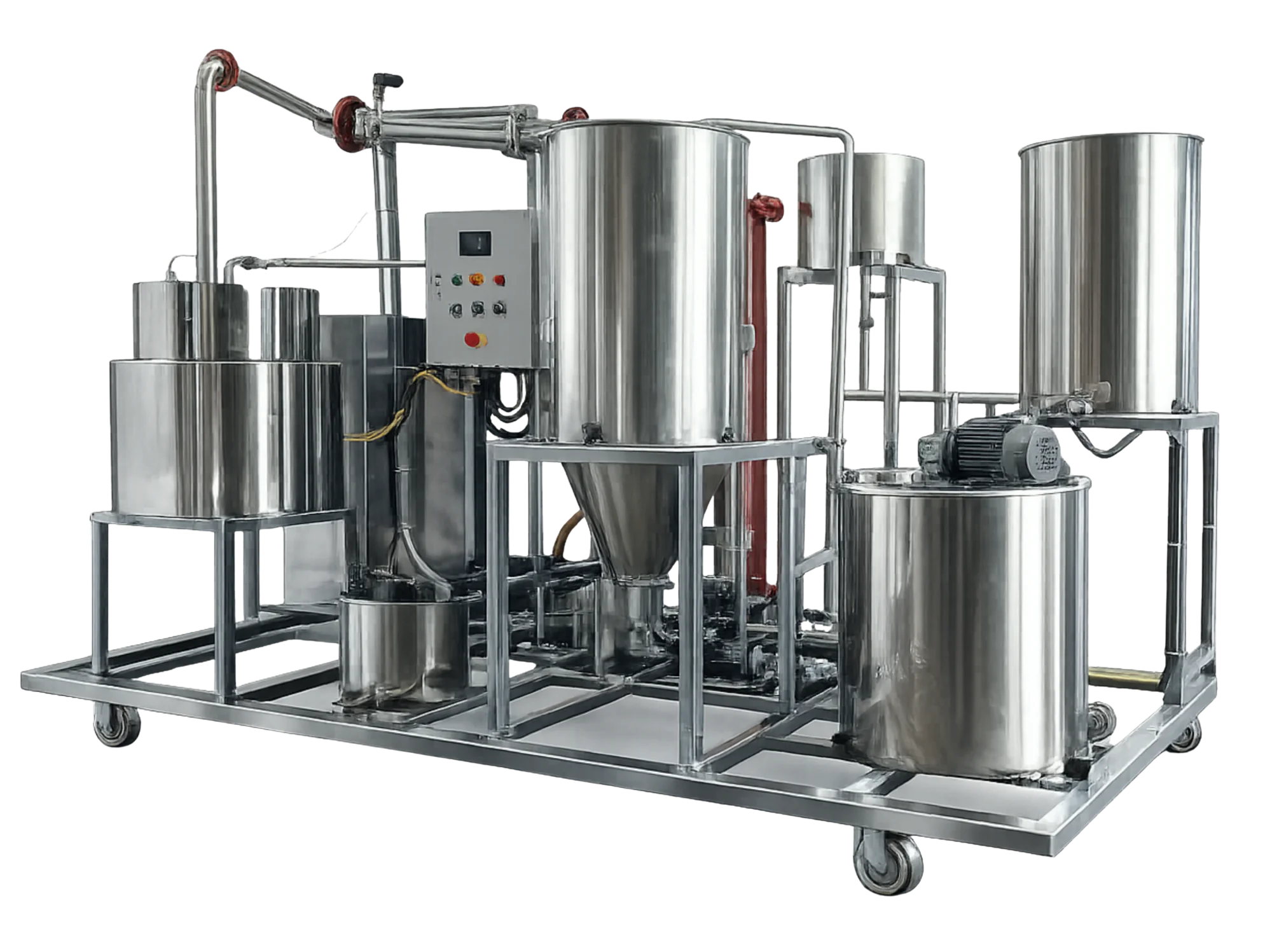
Biodiesel Processing Equipment is used to process suitable waste and vegetable-based oils into biodiesel through a controlled batch production system. Veera Group manufactures biodiesel processing systems designed primarily for used cooking oil (UCO) from restaurants, hotels, food industries and commercial kitchens.
The equipment range is designed for projects that want to process available oil feedstock into biodiesel for applications including diesel engines, generators, agricultural machinery, commercial vehicles and industrial use.
Rather than choosing equipment only by tank size, a biodiesel project should consider the oil source, water content, required batch output, processing time and intended biodiesel application.


FROM USED COOKING OIL TO BIODIESEL
A CONTROLLED PROCESS FOR CONVERTING WASTE OIL INTO FUEL
The purpose of Biodiesel Processing Equipment is to transform suitable oil feedstock into biodiesel through a controlled processing sequence.
The Veera system incorporates a transesterification process, filtration, water management and, optionally, methanol recovery.
The basic production pathway can be understood as:
USED COOKING OIL → PROCESSING → TRANSESTERIFICATION → FILTRATION / DE-WATERING → BIODIESEL
The catalog states a biodiesel yield range of approximately 85–90% for the listed systems.
WHAT OILS CAN BE PROCESSED?
THE FEEDSTOCK DEFINES THE STARTING POINT
Veera’s Biodiesel Processing Equipment is listed for several oil feedstocks.
USED COOKING OIL
Used cooking oil from restaurants, hotels, food industries and commercial kitchens is a primary feedstock identified in the catalog.
VEGETABLE OIL
Vegetable oil is also listed among the acceptable raw materials.
ANIMAL FAT
The catalog identifies animal fat as another possible feedstock.
NON-EDIBLE VEGETABLE OIL
Non-edible vegetable oils, including jatropha oil, are listed as raw materials.
Before purchasing Biodiesel Processing Equipment, the actual feedstock should be evaluated for its composition and water content.
EXPLORE OUR RANGE OF HIGH-PERFORMANCE Biodiesel Machine
EXPLORE OUR RANGE OF HIGH-PERFORMANCE
Biodiesel Machine
USED COOKING OIL
TO BIO DIESEL
Convert used cooking oil into high-performance biodiesel with 85-90% yield efficiency. Designed for restaurants, food industries and commercial kitchens. Backed by a 100% money-back guarantee.
Get a Quote


WHY WATER CONTENT MATTERS IN BIODIESEL PROCESSING
PREPARING THE OIL FOR CONSISTENT PROCESSING
Feedstock preparation is an important part of a biodiesel production project.
The Veera catalog specifies an acceptable water content of less than 2% for its listed BD200 SC, BD500 SC and BD1000 SC systems.
This gives buyers an important specification to consider before installing the equipment.
A project should establish:
- Source of the used cooking oil
- Typical oil quality
- Water content
- Daily or batch-wise oil availability
- Required biodiesel output
- Desired level of automation
- Available electrical supply
The equipment can then be selected around the actual feedstock and production requirement.
FIND THE RIGHT PROCESSING CAPACITY
THREE BATCH SYSTEMS FOR DIFFERENT OUTPUT REQUIREMENTS
Veera’s Biodiesel Processing Equipment range includes three listed batch capacities.
| MODEL | ELECTRICAL POWER | BIODIESEL OUTPUT | BATCH CYCLE |
|---|---|---|---|
| BD200 SC | 5 kW | 180 L/batch | 5–6 hours |
| BD500 SC | 9 kW | 450 L/batch | 5–6 hours |
| BD1000 SC | 13 kW | 900 L/batch | 5–6 hours |
The BD200 SC is listed at US$2,800–5,500, the BD500 SC at US$4,800–7,500, and the BD1000 SC at US$5,500–9,500.
The listed systems operate on 5–6 hour batch cycles, so production planning should account for the complete processing cycle rather than looking only at nominal output per batch.
HOW THE BIODIESEL PROCESSING SYSTEM OPERATES
PROCESSING, FILTRATION AND METHANOL RECOVERY
Veera’s Biodiesel Processing Equipment combines several functions within the processing system.
OIL PROCESSING
Suitable used cooking oil or other listed feedstock is introduced into the system.
TRANSESTERIFICATION
The catalog identifies a transesterification process as part of biodiesel production.
WATER MANAGEMENT
The equipment includes water-related processing components, with the specified feedstock water-content limit below 2%.
FILTRATION
The catalog describes an inbuilt filtration system intended to support high-purity output.
METHANOL RECOVERY
A methanol recovery system with de-watering capability is listed as an optional feature.
BIODIESEL COLLECTION
The finished biodiesel is collected after processing, with the catalog listing different output quantities depending on the machine model.
WHERE CAN BIODIESEL PROCESSING EQUIPMENT BE USED?
PROJECTS THAT HAVE ACCESS TO SUITABLE OIL FEEDSTOCK
The commercial opportunity for Biodiesel Processing Equipment starts with a reliable source of suitable oil.
RESTAURANT AND COMMERCIAL KITCHEN OPERATIONS
Restaurants and commercial kitchens can generate used cooking oil that can be collected as a feedstock.
FOOD INDUSTRIES
Food-processing businesses may have access to suitable waste cooking oil streams.
HOTEL OPERATIONS
Hotels with commercial kitchens can generate used cooking oil that may be evaluated for biodiesel processing.
BIODIESEL PRODUCTION PROJECTS
Dedicated biodiesel projects can select equipment according to available feedstock and required batch output.
The catalog specifically identifies UCO from restaurants, food industries, hotels and commercial kitchens as a feedstock source.
TECHNICAL DETAILS THAT MATTER BEFORE INSTALLATION
PLAN THE COMPLETE BIODIESEL PROCESSING SETUP
Before selecting Biodiesel Processing Equipment, buyers should review the technical requirements of the complete project.
WATER CONTENT
The listed acceptable water content is below 2%.
BATCH OUTPUT
Output ranges from 180 litres per batch on the BD200 SC to 900 litres per batch on the BD1000 SC.
ELECTRICAL REQUIREMENT
The listed machines require:
- BD200 SC — 5 kW
- BD500 SC — 9 kW
- BD1000 SC — 13 kW
AUTOMATION
The systems are listed with automatic and semi-automatic operating modes.
VOLTAGE
The catalog lists 380V 3-phase or 220V 1-phase, 50/60 Hz.
BY-PRODUCT
Glycerine yield is listed at approximately 10–12%, with biodiesel density specified at 850–870.
READY TO PROCESS USED COOKING OIL INTO BIODIESEL?

Share your oil source, available quantity and required production capacity with Veera Group to identify the appropriate Biodiesel Processing Equipment for your project.
USED COOKING OIL → PROCESSING → BIODIESEL → ENERGY APPLICATIONS
FAQs
WHAT IS BIODIESEL PROCESSING EQUIPMENT?
Biodiesel Processing Equipment is machinery used to process suitable oils such as used cooking oil into biodiesel. Veera's systems are designed around batch processing and include filtration and water-management features.
WHAT RAW MATERIAL CAN BE USED?
The catalog lists used cooking oil, vegetable oil, animal fat and non-edible vegetable oil such as jatropha oil.
HOW MUCH BIODIESEL CAN THE EQUIPMENT PRODUCE?
Depending on the model, the catalog lists 180 L, 450 L or 900 L of biodiesel per batch.
HOW LONG DOES ONE BATCH TAKE?
The listed BD200 SC, BD500 SC and BD1000 SC systems have a 5–6 hour batch cycle.
WHAT IS THE BIODIESEL YIELD?
Veera's catalog states a yield range of approximately 85–90% for the listed biodiesel processors.
BOOK A FREE CALL
Markeshwaran M│ Co-Founder & Technical SEO Lead │ Beyond Digital Marketing Agency
Markeshwaran specializes in industrial SEO, technical SEO, and B2B website optimization for manufacturing, renewable energy, and industrial businesses.
https://www.linkedin.com/in/markeshwaran-m-448777284/

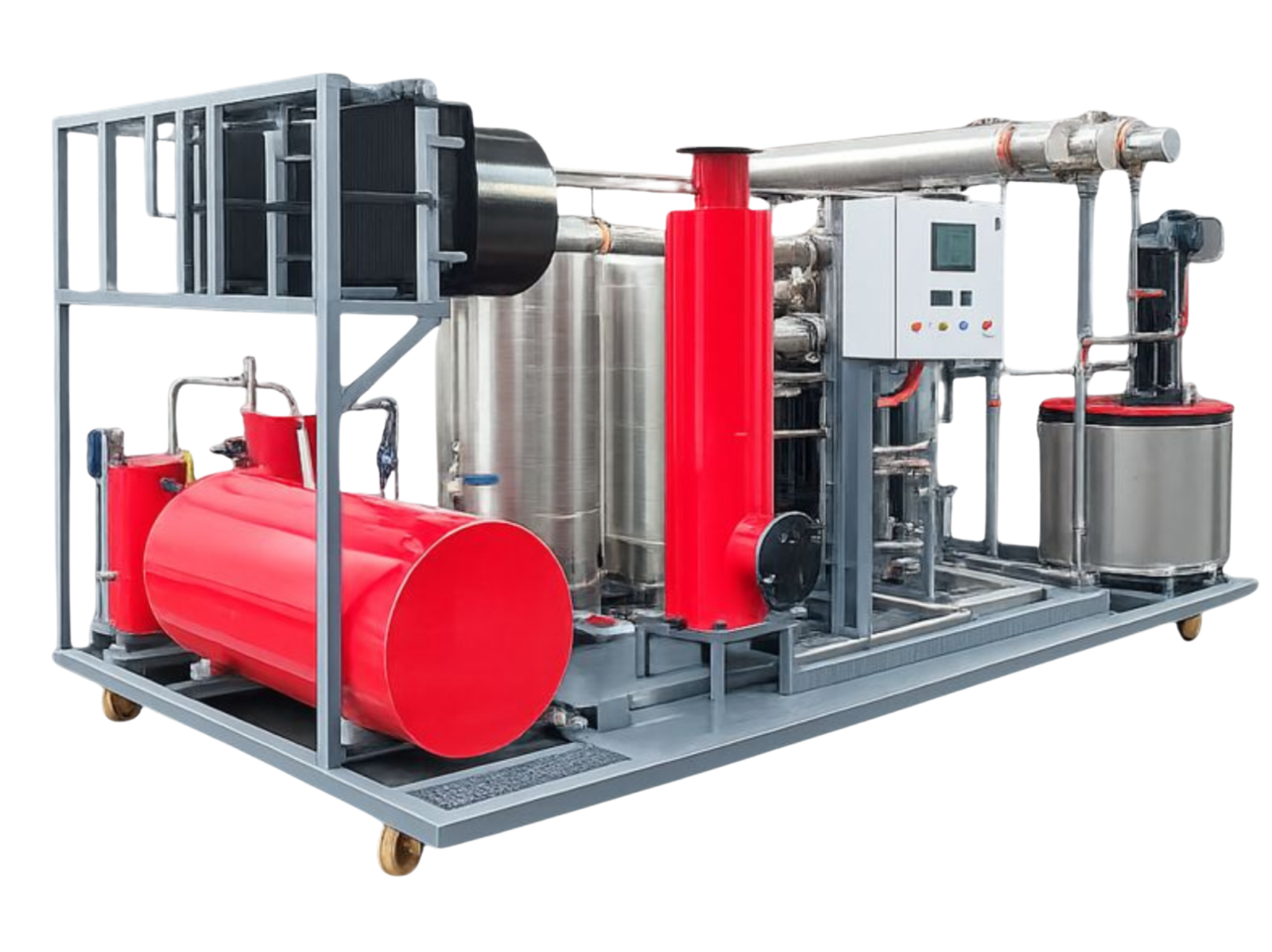 Waste Oil to Diesel Machine
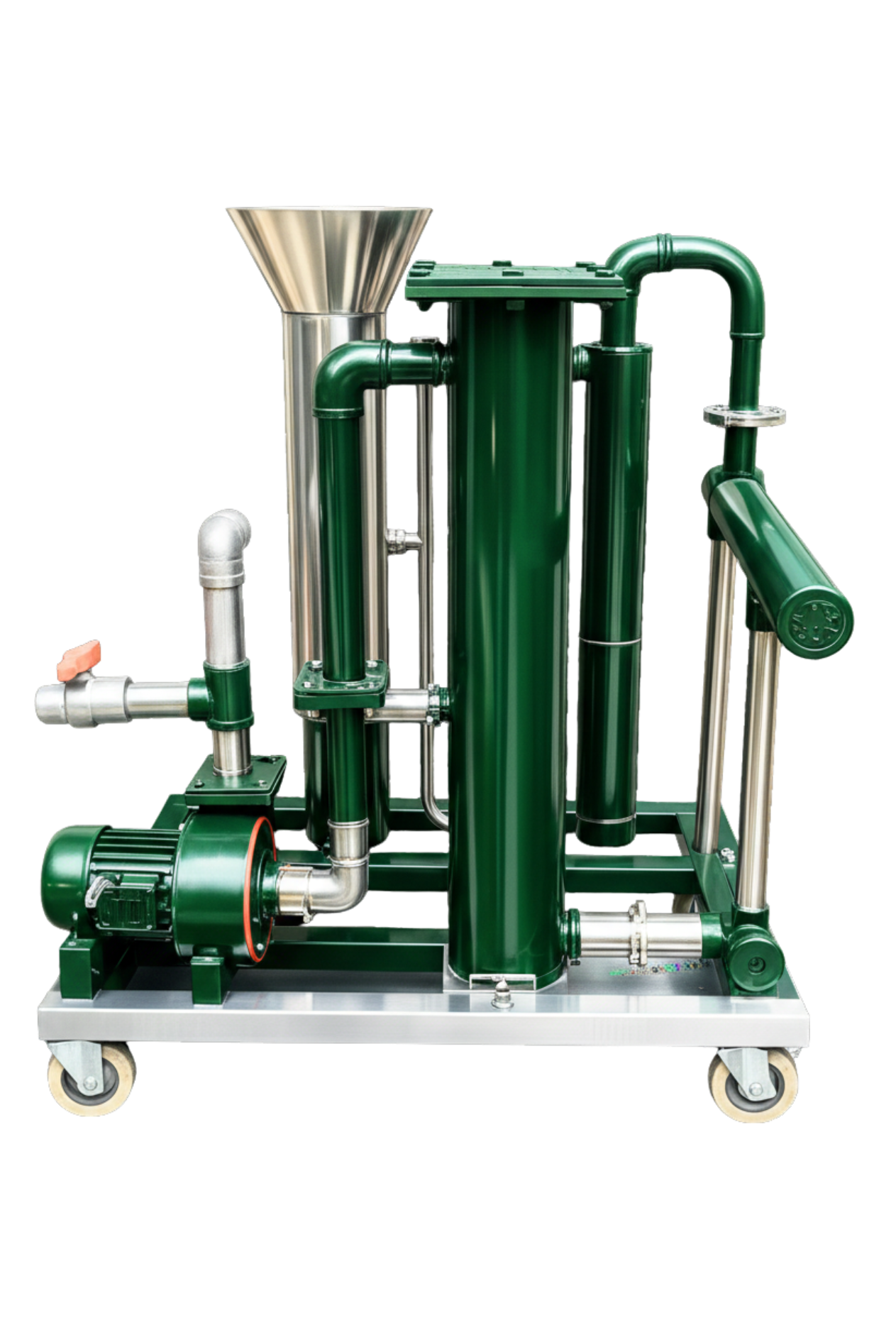 Biomass Gasifier