✦ Verified Gold Plus Supplier✦ Assessed by SGS via Alibaba.com✦ Verified Gold Plus Supplier✦ Assessed by SGS via Alibaba.com✦ Verified Gold Plus Supplier✦ Assessed by SGS via Alibaba.com✦ Verified Gold Plus Supplier✦ Assessed by SGS via Alibaba.com✦ Verified Gold Plus Supplier✦ Assessed by SGS via Alibaba.com✦ Verified Gold Plus Supplier✦ Assessed by SGS via Alibaba.com
Used Oil Recycling Process: A Complete Guide to Waste Oil Recovery
Used oil is generated every day by vehicles, workshops, factories, heavy equipment, generators, and industrial machinery. Although this oil can no longer perform its original function effectively, it still contains valuable hydrocarbon components.
The used oil recycling process is designed to separate unwanted contaminants and recover useful oil fractions from suitable waste oils. Depending on the feedstock and required end product, the process can involve filtration, water removal, controlled heating, molecular distillation, catalytic treatment, and product recovery.
For businesses that regularly collect or generate used oil, understanding the used oil recycling process is an important first step before investing in recycling equipment.
What Is Used Oil Recycling?
Used oil recycling is the controlled treatment of waste oil to recover useful components and reduce the amount of material requiring disposal.
During its service life, engine oil, hydraulic oil, gearbox oil, and other lubricating oils can collect:
Dirt and suspended solids
Metal particles
Water and moisture
Carbon deposits
Degraded additives
Other contaminants
The objective of the used oil recycling process is to separate these unwanted materials while recovering valuable hydrocarbon fractions.
For a business planning a commercial recycling operation, the next step is to evaluate the appropriate [Used Oil Recycling Plant] based on feedstock, capacity, and desired output.
How Does the Used Oil Recycling Process Work?
The exact used oil recycling process depends on the type and condition of the feedstock and the required recovered product.
A typical industrial process can involve several stages.
1. Used Oil Collection
The process begins with collecting suitable waste oil from sources such as automotive workshops, industrial machinery, generators, transportation fleets, and manufacturing facilities.
The collected material should be checked before processing because different waste oils can have different compositions and contamination levels.
2. Feedstock Preparation
Before the main treatment stage, the oil is prepared for processing.
Large particles, dirt, sludge, and other unwanted materials can be removed through suitable filtration or separation methods.
Proper preparation is an important part of the used oil recycling process because cleaner feedstock can help protect downstream equipment and provide more consistent processing conditions.
3. Filtration and Solid Removal
Used oil may contain metal particles, carbon deposits, dirt, and other suspended solids.
Filtration helps remove these materials before the oil enters the main separation system.
The required filtration arrangement depends on the condition of the incoming oil.
A well-designed used oil recycling process therefore starts with understanding the actual feedstock rather than assuming every waste-oil stream is identical.
4. Water and Moisture Removal
Water can enter used oil through condensation, storage conditions, equipment operation, or accidental contamination.
Removing excess water is an important part of the used oil recycling process because moisture can interfere with subsequent heating and separation stages.
The system can use suitable dehydration and separation methods depending on the feedstock.
5. Controlled Heating and Separation
After initial preparation, the oil can undergo controlled heating.
The objective is to separate different components based on their physical properties and boiling characteristics.
Temperature control is particularly important during this stage of the used oil recycling process.
The operating conditions need to be selected according to the feedstock and the technology being used.
6. Molecular Distillation
For Veera Group’s MD Series, molecular distillation is a core part of the processing technology.
Molecular distillation allows suitable hydrocarbon fractions to be separated under controlled conditions.
Veera’s supplied specifications describe the MD Series as a waste-oil-to-diesel system using molecular distillation with a proprietary catalyst process.
This is an important distinction when evaluating a used oil recycling process, because the technology and equipment configuration influence the final product and operating requirements.
7. Catalytic Filtration and Further Treatment
Following the distillation stage, further treatment can be applied depending on the system configuration and desired product.
Veera’s supplied MD200 SC information identifies a multi-stage catalyst system, including reusable catalysts and a final filtration catalyst.
The purpose of this stage is to further treat the processed oil before product recovery.
8. Condensation and Product Recovery
After separation, the recovered vapour fractions are condensed and collected.
The resulting products depend on the feedstock and plant configuration.
For Veera’s continuous MD configuration, the supplied specification identifies diesel yield in the range of approximately 80–85%, depending on the system and feedstock.
This is why expected recovery should always be evaluated against the actual waste oil available for processing rather than assuming the same result from every feedstock.
What Can Be Recovered From Used Oil?
Used oil is not a uniform material. Its composition can vary depending on its source, age, additives, contamination, and previous use.
Depending on the technology and feedstock, the used oil recycling process can recover useful hydrocarbon fractions for further use or treatment.
Possible feedstocks for Veera’s systems include:
Used engine oil
Hydraulic oil
Gearbox oil
Tyre pyrolysis oil
Plastic pyrolysis oil
These feedstocks are identified in Veera Group’s supplied product material.
If the objective is specifically fuel recovery, businesses can also evaluate a [Waste Oil to Diesel Machine] based on their feedstock and required output.
Why Is Used Oil Recycling Important?
The used oil recycling process is not simply about treating waste. It is about recovering value from a material that still contains useful hydrocarbon components.
Resource Recovery
Recycling can help recover useful fractions from suitable waste oils.
Waste Reduction
A controlled recycling operation can reduce the quantity of used oil requiring disposal.
Better Resource Utilization
Recovering useful components can support more efficient use of existing petroleum resources.
Business Opportunity
Companies that collect or generate significant quantities of used oil can evaluate whether recycling can become part of their commercial operation.
Used Oil Recycling vs. Used Oil Disposal
Recycling and disposal have different objectives.
Disposal focuses primarily on managing waste safely.
Recycling focuses on recovering value from the waste material.
A recycling facility requires suitable equipment, operating controls, safety systems, and regulatory compliance. However, when the feedstock supply and recovered-product market are suitable, recycling can provide an additional resource-recovery opportunity.
The economics of the used oil recycling process should therefore be evaluated based on actual feedstock availability, operating costs, recovery rate, product value, transportation, and local requirements.
Factors to Consider Before Setting Up a Used Oil Recycling Plant
Choosing a recycling plant should involve more than comparing machine prices.
Feedstock Type
Identify exactly what type of used oil you will process.
Feedstock Quantity
Determine how much suitable oil is consistently available per day or month.
Desired Product
Decide whether you want to recover diesel-range fuel fractions, oil fractions, or another product.
Processing Capacity
Select a plant capacity that matches your actual feedstock supply.
Energy Requirements
Heating and separation require energy, so energy consumption should be included in the project evaluation.
Safety Requirements
Used oil is a hydrocarbon-based material. Proper temperature control, storage, ventilation, electrical systems, and fire-safety provisions are essential.
Local Regulations
Waste-oil collection, transportation, processing, emissions, and recovered-product use may be subject to different regulations depending on the country or region.
How to Choose a Used Oil Recycling Machine
The right used oil recycling machine depends on your feedstock and processing requirements.
Before purchasing equipment, discuss:
Type of waste oil
Available feedstock quantity
Required processing capacity
Desired recovered product
Processing technology
Energy consumption
Operating requirements
Maintenance
Safety systems
Installation requirements
Technical support
For Veera’s MD Series, the supplied specifications include different configurations ranging from smaller batch systems to higher-capacity continuous systems.
For example, the MD50 SC is specified at 50 L input per batch, while the MD200 SC is specified at 200 L waste oil input per batch.
Veera Group’s Used Oil Recycling Technology
Veera Group’s MD Series is designed around molecular distillation and catalytic treatment for suitable waste-oil feedstocks.
The supplied specifications include:
Batch and continuous configurations
Different processing capacities
Molecular distillation
Multi-stage catalyst treatment
Diesel-water separation
Cooling and water-management systems
Remote monitoring on applicable configurations
Plug-and-play system design on the specified series
The appropriate configuration should be selected according to the customer’s feedstock, available quantity, desired output, and project requirements.
Used Oil Recycling Applications
The used oil recycling process can be relevant to businesses across several industries.
Automotive Workshops
Vehicle servicing and maintenance generate used engine and lubricating oils.
Transportation
Fleet operators can generate significant quantities of used oil through regular vehicle maintenance.
Manufacturing
Factories and industrial facilities may generate used hydraulic and lubricating oils.
Heavy Equipment
Construction, mining, and other heavy-equipment operations can generate used lubricants and hydraulic oils.
Waste Oil Collection
Waste-management companies and oil collectors can evaluate recycling as part of their resource-recovery operations.
Used Oil Recycling in Global Markets
The need to manage industrial and automotive waste oil exists beyond many markets.
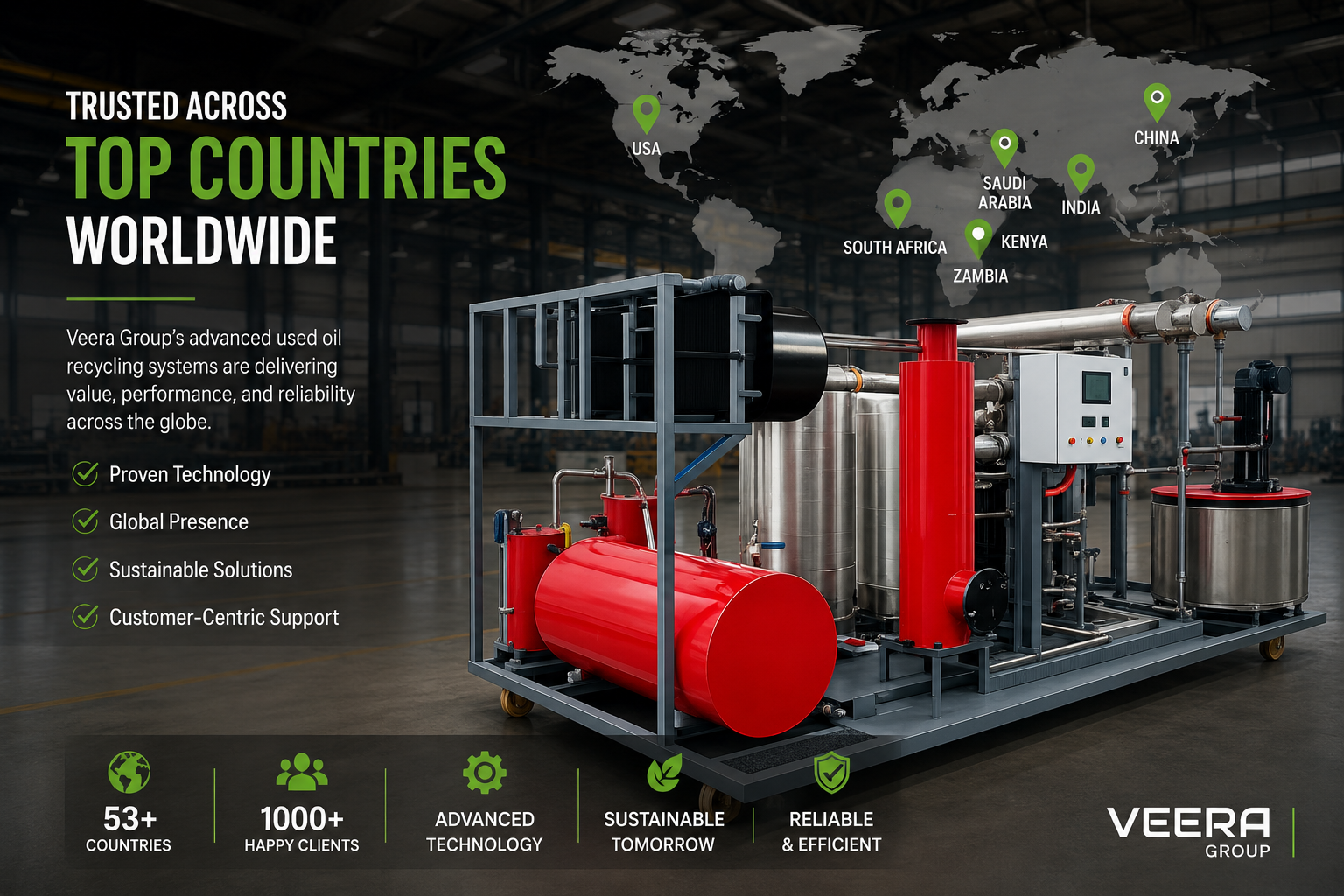
Veera Group’s supplied company information identifies international markets including the USA, South Africa, China, Saudi Arabia, Kenya, and Zambia, and states that its systems have been exported to 53+ countries.
This international experience is relevant for businesses evaluating the used oil recycling process in different operating environments.
United States
Large automotive, transportation, industrial, and waste-management sectors generate significant quantities of used oil.
China
Manufacturing, machinery, transportation, and industrial operations generate various waste-oil streams.
India
Growing automotive, manufacturing, transportation, and industrial activity creates opportunities for waste-oil recovery.
Saudi Arabia
Transportation, heavy equipment, industrial operations, and energy-related businesses can generate used lubricating oils.
South Africa
Automotive, mining, industrial, and transportation operations create potential applications for used-oil recycling.
The suitability of a recycling plant should always be evaluated according to the actual feedstock and regulations in the project location.
Is Used Oil Recycling Economically Viable?
The economics of a used oil recycling process depend on several factors.
A simple project evaluation can consider:
Feedstock cost + transportation + energy + labour + maintenance + processing + product recovery + product selling price
The amount and quality of available feedstock are particularly important.
A plant with a large theoretical capacity may not be economical if there is not enough consistent waste oil available to keep it operating.
Similarly, a smaller system may be more appropriate for a business with a limited but reliable feedstock supply.
Before investing, it is therefore better to evaluate the complete project rather than looking only at machine capacity.
What Makes a Good Used Oil Recycling Process?
A good used oil recycling process should be designed around the actual material being processed.
It should consider:
Consistent Feedstock
A reliable supply of suitable waste oil is essential.
Appropriate Technology
The separation and treatment technology should match the feedstock and target product.
Controlled Operation
Temperature, pressure, flow, and other operating parameters should be properly managed.
Product Quality
The recovered product should be evaluated against the intended application.
Safety
The plant should incorporate appropriate safety systems for handling hydrocarbon-based materials.
Maintainability
Equipment should be practical to operate, inspect, and maintain over its service life.
What Happens After the Recycling Process?
The recovered product should not automatically be assumed to have a single application.
Its final use depends on:
Feedstock composition
Processing technology
Product quality
Further treatment
Local regulations
Intended application
For businesses planning fuel recovery, product testing and applicable regulatory requirements should be evaluated before commercial use.
This is another reason why discussing your project with the equipment manufacturer before purchasing a plant is important.
Frequently Asked Questions
What is the Used Oil Recycling Process?
The used oil recycling process involves treating suitable waste oil to remove contaminants and recover useful hydrocarbon fractions. Depending on the system, stages can include filtration, water removal, controlled heating, molecular distillation, catalytic treatment, condensation, and product recovery.
Can used engine oil be recycled?
Yes. Suitable used engine oil can be processed using appropriate recycling technology. The required process depends on its contamination level and the intended recovered product.
Can used oil be converted into diesel?
Certain recycling technologies can recover diesel-range hydrocarbon fractions from suitable used oils. The actual recovery and product characteristics depend on the feedstock and plant configuration.
What types of oil can be processed?
Veera’s supplied material identifies used engine oil, hydraulic oil, gearbox oil, tyre pyrolysis oil, and plastic pyrolysis oil as applicable feedstocks for its systems.
How much used oil can a plant process?
Capacity depends on the selected configuration. Veera’s supplied information includes batch systems and continuous configurations, with continuous capacity identified up to approximately 3,800 L/day.
What is molecular distillation?
Molecular distillation is a separation technology that allows suitable components of a mixture to be separated under controlled conditions based on their volatility characteristics.
How do I choose the right recycling plant?
Start with your oil type, available quantity, required output, operating schedule, and project location. These details can then be used to evaluate an appropriate plant configuration.
From collection and filtration to water removal, controlled heating, molecular distillation, catalytic treatment, condensation, and product recovery, each stage contributes to the overall recycling operation.
For businesses generating or collecting significant quantities of used oil, the most important step is understanding the feedstock and selecting a recycling system that matches the actual project requirements.
If you are planning a commercial recycling operation, explore Veera Group’s [Used Oil Recycling Plant] and evaluate the appropriate MD Series configuration for your feedstock and required capacity.
Have used oil available for processing?
Share your country, oil type, available quantity, and required capacity with Veera Group to discuss your project.




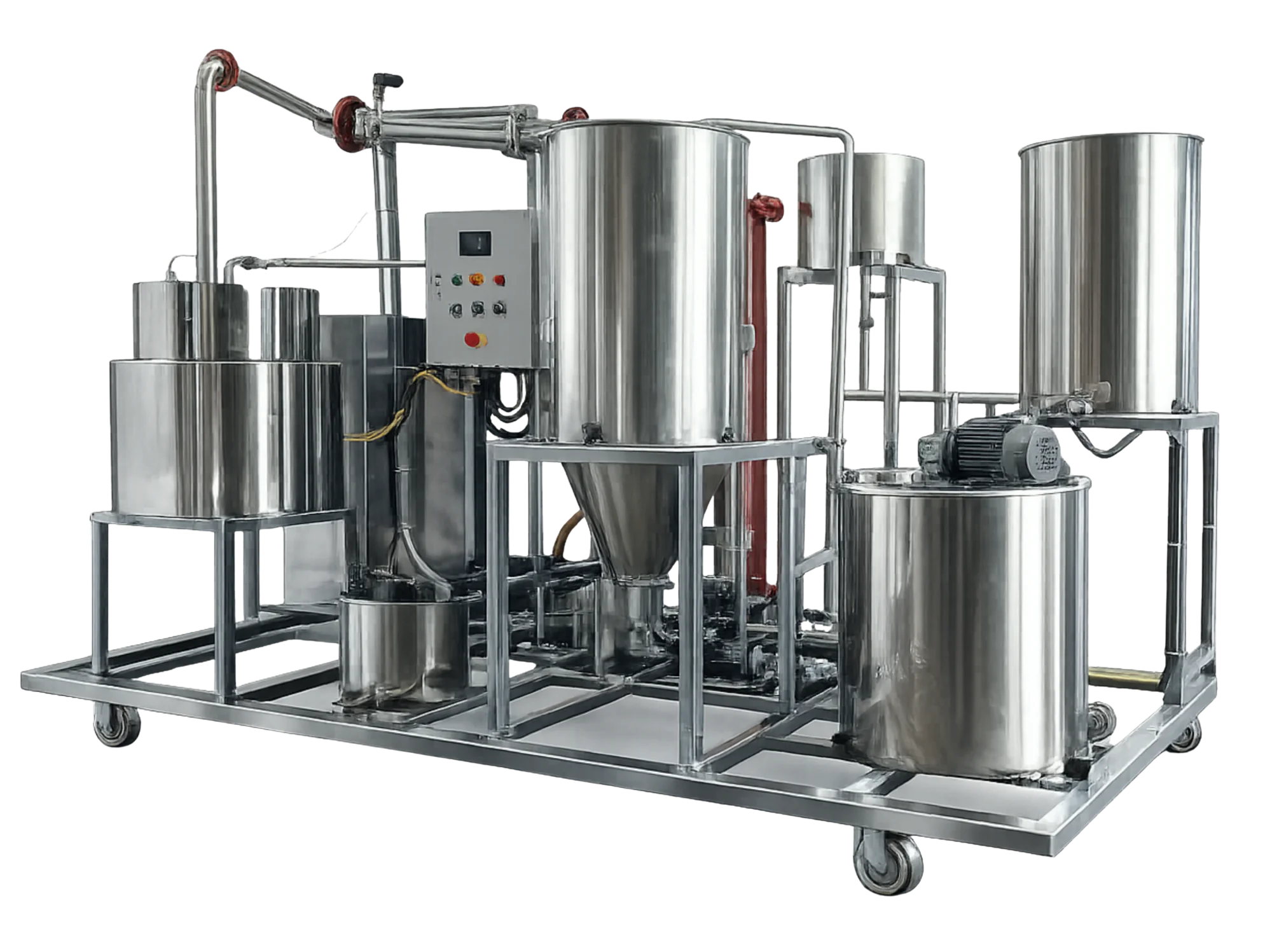
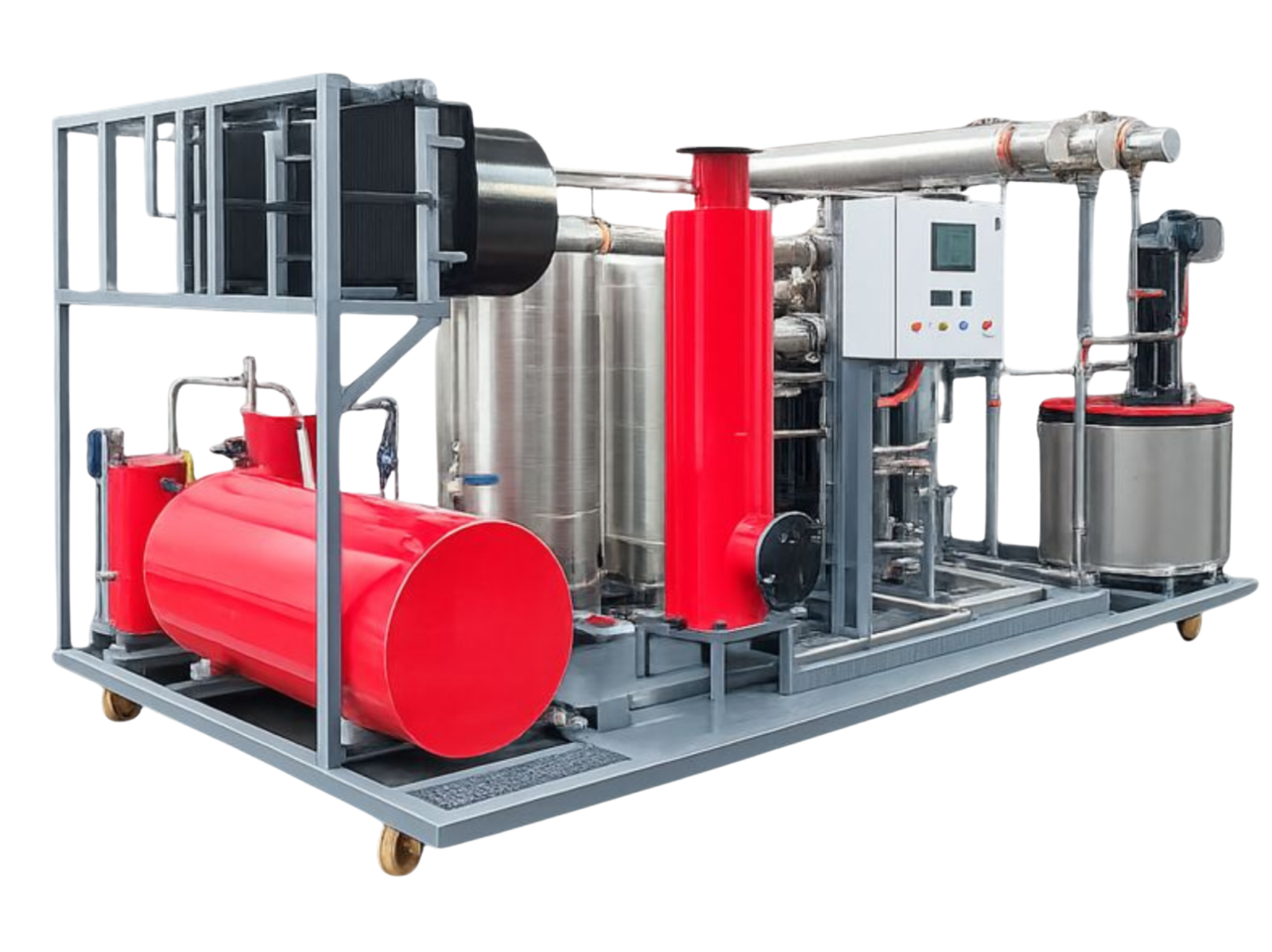 Waste Oil to Diesel Machine
 Biomass Gasifier