
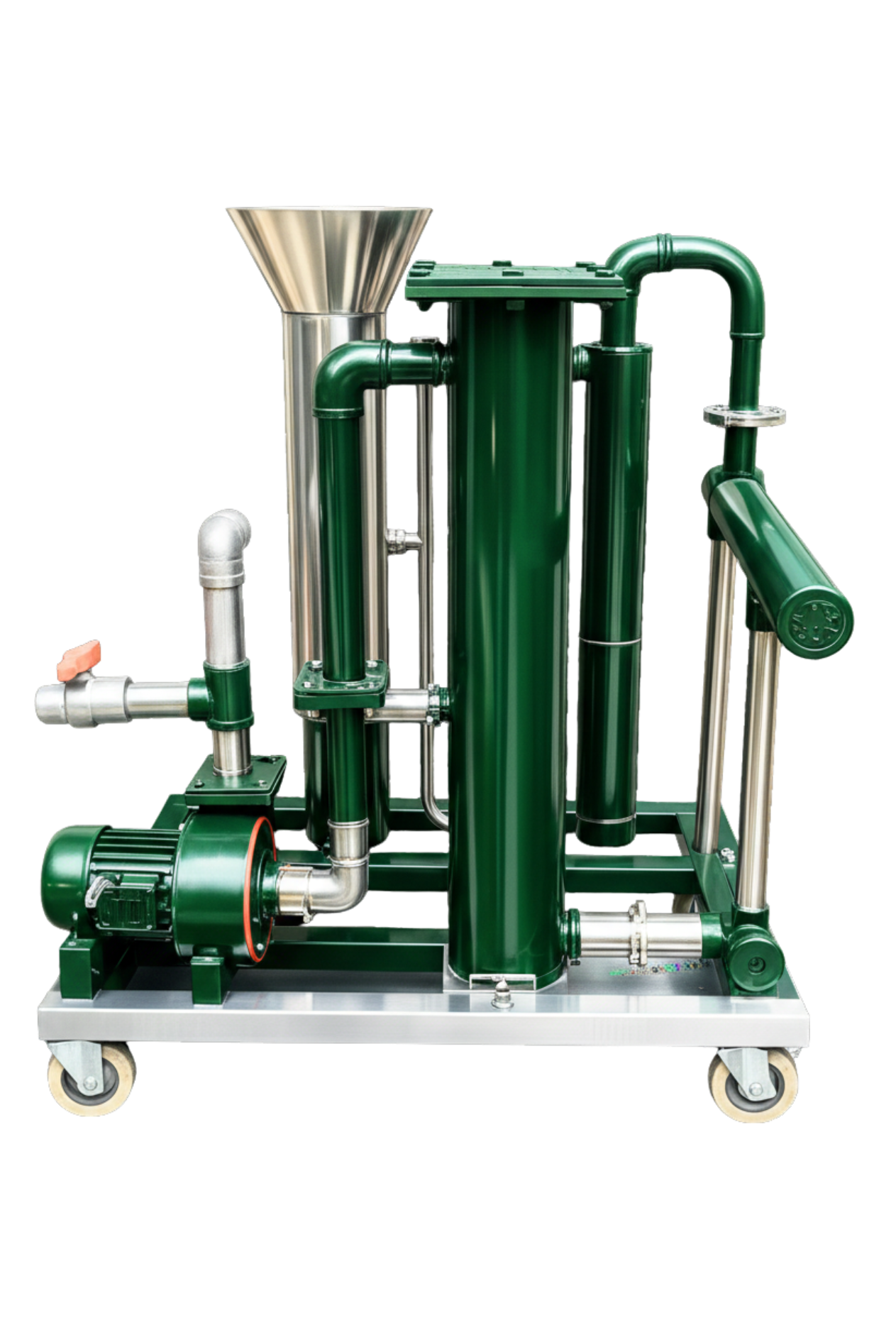
What Is Biomass Gasifier is a common question when industries look for a way to convert agricultural residues, wood waste and other suitable biomass into usable energy. A biomass gasifier is a system that converts solid biomass into a combustible gas called producer gas through controlled thermochemical conversion.
Unlike simply burning biomass, gasification controls the amount of air entering the reactor so the biomass is converted into a gas that can be used for power generation and thermal applications.
For anyone asking What Is Biomass Gasifier, the simplest explanation is: a biomass gasifier converts suitable solid biomass into producer gas, which can then be used as an energy source.
Veera Group manufactures biomass gasification systems designed to process feedstocks such as wood chips, agro-residues, coconut shells, sawdust, rice husk and other suitable organic biomass. The generated producer gas can be used for power generation, industrial heating, boilers, furnaces and drying applications.
WHAT DOES A BIOMASS GASIFIER ACTUALLY DO?
To understand What Is Biomass Gasifier, it helps to look at what happens inside the machine.
The biomass is fed into the gasifier and exposed to controlled heating with a restricted supply of air. Instead of allowing complete combustion, the process converts the solid biomass into a combustible gaseous fuel.
The main stages can be understood as:
BIOMASS FEEDSTOCK → DRYING → THERMAL DECOMPOSITION → OXIDATION → REDUCTION → PRODUCER GAS
The resulting producer gas contains combustible components such as carbon monoxide, hydrogen and methane, along with carbon dioxide and nitrogen. Veera’s gasifier systems use a down-draft configuration with air pre-heating.
This is the basic answer to What Is Biomass Gasifier: it is an energy-conversion system that transforms solid biomass into a gaseous fuel that can be used for useful energy applications.
WHAT BIOMASS CAN BE USED IN A GASIFIER?
A major part of understanding What Is Biomass Gasifier is knowing that the feedstock affects the operation and performance of the system.
Suitable biomass materials listed for Veera’s gasification systems include:
- Wood chips
- Agricultural residues
- Coconut shells
- Sawdust
- Rice husk
- Other suitable organic biomass waste
The current Veera specifications indicate feedstock moisture below 15% and particle size up to 50 mm for the listed gasifier models.
This means biomass preparation is not something to ignore. Moisture, particle size, density and consistency can influence gasification performance, so the actual feedstock should be evaluated before selecting equipment.
HOW DOES BIOMASS BECOME PRODUCER GAS?
When answering What Is Biomass Gasifier, the conversion process is one of the most important points.
First, moisture present in the biomass is removed through heating. The material then undergoes thermal decomposition. Controlled oxidation provides the heat required for the process, while the reduction zone promotes the formation of combustible gases.
The producer gas generated from the process can then be directed toward an appropriate energy application.
Veera’s catalog describes the produced uncondensed gas as suitable for gas generation and heating applications.
So, rather than treating biomass only as solid fuel, gasification creates another usable energy carrier from the same biomass resource.
WHAT IS THE DIFFERENCE BETWEEN BIOMASS GASIFICATION AND DIRECT BURNING?
This is another important part of understanding What Is Biomass Gasifier.
In direct combustion, biomass is burned with sufficient oxygen to release heat.
In gasification, the biomass is exposed to a controlled and restricted air supply. The objective is to produce a combustible gas rather than completely burn the biomass.
The difference can be simplified as:
DIRECT COMBUSTION
Biomass → Burning → Heat
GASIFICATION
Biomass → Controlled Thermochemical Conversion → Producer Gas → Power / Heat
This makes gasification useful where an operation wants to integrate biomass with gas-based power generation or thermal equipment.
HOW MUCH POWER CAN A BIOMASS GASIFIER PRODUCE?
The answer depends on the gasifier model, biomass characteristics and the overall energy system.
Veera’s current range includes several continuously operated down-draft gasifier configurations:
| MODEL | BIOMASS INPUT | GAS YIELD | POWER CAPACITY |
|---|---|---|---|
| Veera G10 | 12–14 kg/hr | 25–30 m³ | 10 kW |
| Veera G20 | 20–28 kg/hr | 40–45 m³ | 20 kW |
| Veera G50 / G40 configuration | 40–48 kg/hr | 80–85 m³ | 40 kW |
| Veera GCP-50 | 50–60 kg/hr | 80–85 m³ | 50 kW |
| Veera GC 150 | 180–210 kg/hr | 390–450 m³ | 150 kW |
The catalog lists gasification efficiency of approximately 60–75% and an average output calorific value above 1100 kcal/Nm³ for these configurations.
WHERE CAN PRODUCER GAS BE USED?
Once we understand What Is Biomass Gasifier, the next question is where the producer gas can actually be used.
According to Veera’s gasifier specifications, producer gas can support:
POWER GENERATION
Producer gas can be supplied to an appropriate generator system for biomass-based electricity production.
INDUSTRIAL HEATING
Industries requiring thermal energy can use producer gas for suitable heating applications.
BOILERS AND FURNACES
The gas can be integrated into suitable boiler and furnace applications where the equipment is designed for producer gas.
DRYING APPLICATIONS
Biomass-based producer gas can also be used for suitable industrial drying requirements.
These applications make biomass gasification relevant to industries that already generate biomass residues and need a practical way to convert those residues into useful energy.
HOW DO YOU CHOOSE THE RIGHT GASIFIER?
Knowing What Is Biomass Gasifier is only the starting point. Choosing the right system requires looking at the complete project.
Consider these factors before selecting a gasifier:
BIOMASS AVAILABILITY
How much biomass is available every day?
BIOMASS CHARACTERISTICS
What is the moisture level, particle size and physical consistency?
ENERGY REQUIREMENT
Is the objective electricity generation, process heating, boiler operation or drying?
REQUIRED CAPACITY
A 10 kW system and a 150 kW system have very different biomass input requirements.
OPERATING METHOD
The available Veera models are continuously operated down-draft systems, with manual biomass feeding and manual start-up and ash removal.
The correct gasifier should therefore be selected according to the actual biomass resource and energy requirement rather than simply choosing the largest available machine.
BIOMASS GASIFIER GENERATOR FOR BIOMASS-BASED POWER
A Biomass Gasifier Generator combines the gasification process with power-generation equipment so that suitable solid biomass can be converted into producer gas and then into usable electricity.
For businesses generating wood waste, agricultural residues, sawdust, coconut shells or similar biomass, this approach can create an energy pathway from a locally available material.
A Biomass Gasifier Generator is particularly relevant when the project requires decentralized power or when biomass is already available as part of an industrial or agricultural operation.
The right system still depends on the feedstock, required power capacity, operating conditions and integration with the generator.
FROM BIOMASS WASTE TO USEFUL ENERGY

The real value of understanding What Is Biomass Gasifier is seeing the complete connection between waste and energy.
A typical project can be viewed as:
BIOMASS RESIDUES
↓
FEEDSTOCK PREPARATION
↓
BIOMASS GASIFICATION
↓
PRODUCER GAS
↓
POWER GENERATION / INDUSTRIAL HEATING
↓
USEFUL ENERGY
Veera Group manufactures and exports biomass gasification systems under its Veera Biopower and Veera PowerAfrica brands. The company states that it has served more than 53 countries since 2013 and holds ISO 9001-2015, ISO 14001-2015 and CE certifications.
For projects specifically looking for a Biomass Gasifier Generator, the important step is to match the machine configuration with the available biomass and intended energy application.
BIOMASS GASIFIER GENERATOR: WHAT SHOULD BUYERS CHECK?
Before purchasing a Biomass Gasifier Generator, buyers should have clear answers to these questions:
- What biomass will be available?
- How many kilograms of biomass are available per hour?
- What is the average moisture content?
- What particle size will enter the gasifier?
- How many kW of power are required?
- Will the producer gas be used for electricity or thermal energy?
- How will biomass feeding and ash removal be handled?
- What site and installation requirements need to be considered?
- What level of monitoring is required?
Veera’s listed systems include temperature indication and remote monitoring through a mobile phone, while the listed models use manual biomass feeding and manual start-up/ash removal.
WHY BIOMASS GASIFICATION CAN FIT WASTE-TO-ENERGY PROJECTS
The strongest reason to consider biomass gasification is the connection between an existing biomass resource and an energy requirement.
Instead of treating suitable biomass residues only as waste, a gasification system can convert them into producer gas for useful energy applications.
This can be relevant to:
- Agro-processing facilities
- Biomass-processing industries
- Wood-processing operations
- Agricultural businesses
- Manufacturing facilities
- Industries requiring process heat
- Decentralized power projects
The suitability of a particular biomass and application should always be evaluated against beyond the technical requirements of the gasifier.
FREQUENTLY ASKED QUESTIONS
What Is Biomass Gasifier?
A biomass gasifier is a machine that converts suitable solid biomass into combustible producer gas through controlled thermochemical conversion with a restricted air supply.
What is producer gas?
Producer gas is the combustible gas generated during biomass gasification. It contains gases such as carbon monoxide, hydrogen and methane along with carbon dioxide and nitrogen.
What biomass can a gasifier process?
Veera lists wood chips, agricultural residues, coconut shells, sawdust, rice husk and other suitable organic biomass waste as feedstocks.
Can a biomass gasifier generate electricity?
Yes. Producer gas from a suitable gasification system can be used for power generation when integrated with appropriate generation equipment.
What is the difference between a biomass gasifier and a Biomass Gasifier Generator?
A biomass gasifier focuses on converting solid biomass into producer gas. A Biomass Gasifier Generator project uses that producer gas as part of a complete power-generation system.
What power capacities are available?
Veera’s listed gasifier range includes 10 kW, 20 kW, 40 kW, 50 kW and 150 kW configurations.
What should I know before buying a biomass gasifier?
The most important points are biomass availability, moisture, particle size, required energy output, application, operating method and the correct machine capacity.
Is a Biomass Gasifier Generator suitable for every type of biomass?
No. Feedstock suitability depends on the material’s characteristics and the gasifier requirements. The actual biomass should be evaluated before final machine selection.
Can the producer gas be used for heating?
Yes. Veera states that its producer gas can be used for industrial heating, boilers, furnaces, dryers and other thermal applications.
Where does Veera Group supply biomass gasification systems?
Veera states that it manufactures and exports its biomass gasification systems internationally and has served more than 53 countries since 2013.
What is the main idea behind biomass gasification?
The basic idea is simple: convert suitable solid biomass into producer gas and use that gas for useful energy applications.

 Waste Oil to Diesel Machine
 Biomass Gasifier