
Lube Oil Recycling Plant
A Lube Oil Recycling Plant is an industrial processing system designed to treat used lubricating oils and recover useful components or products from them.
The exact recycling route depends on the feedstock, process technology and required final product.
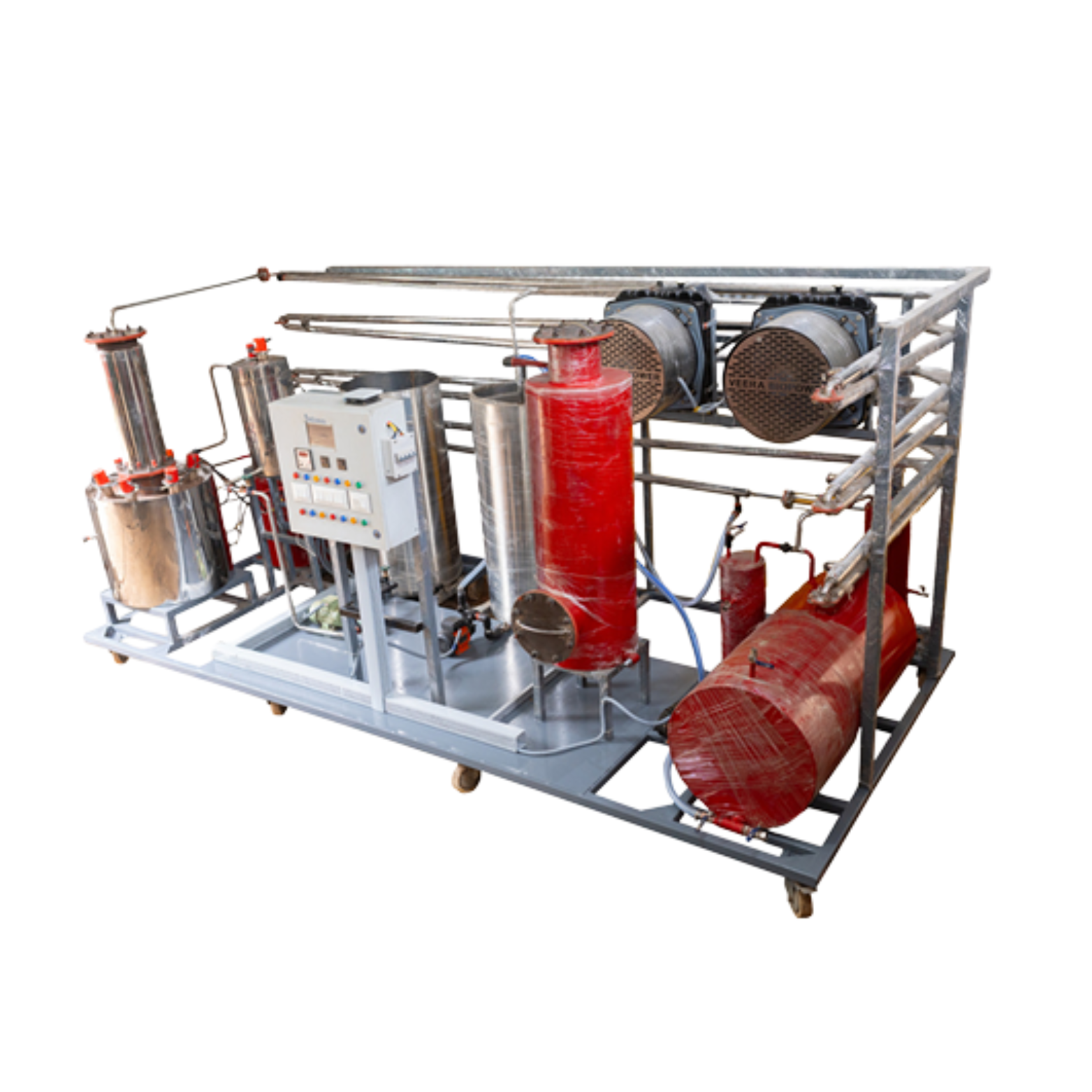
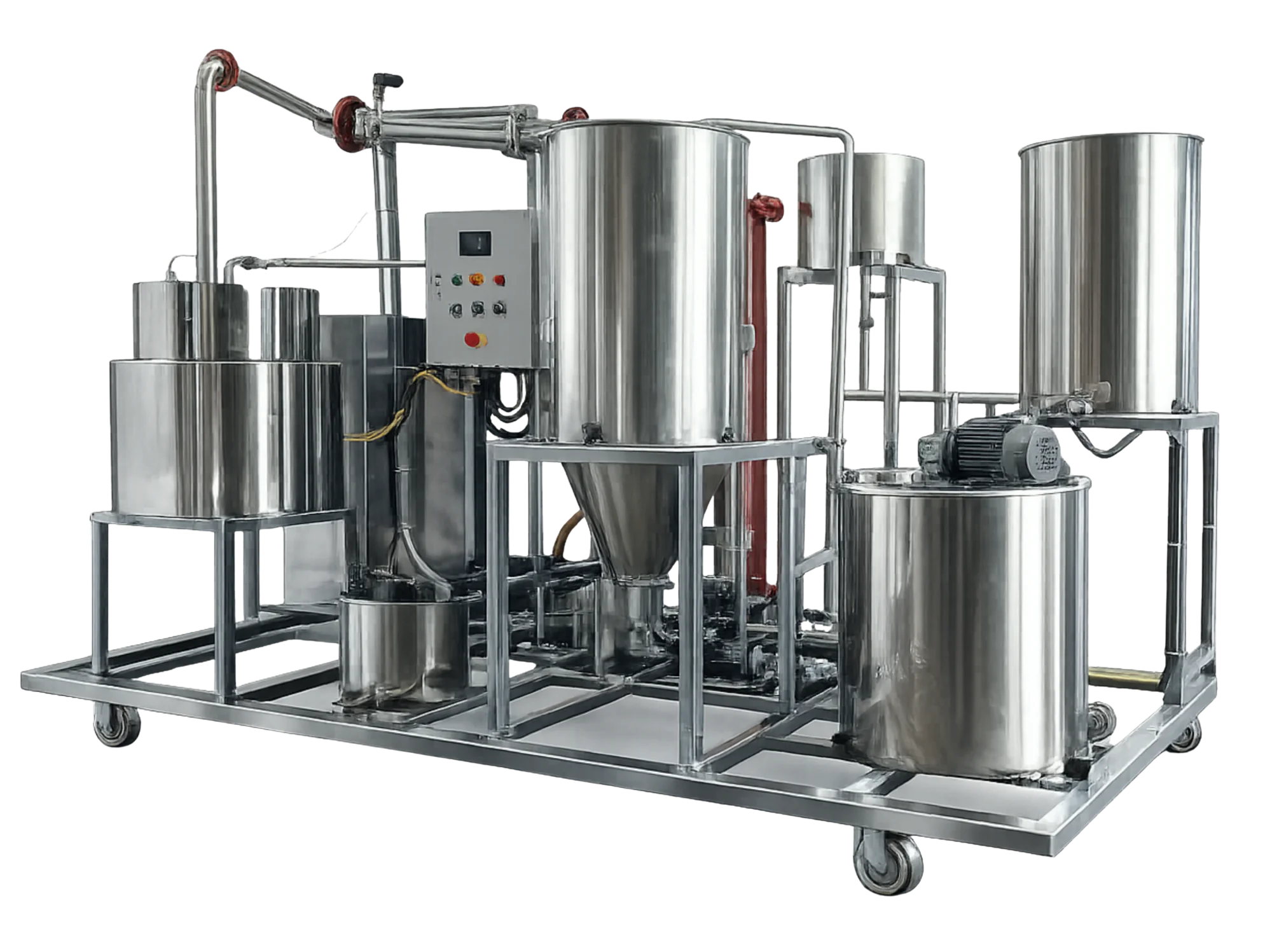
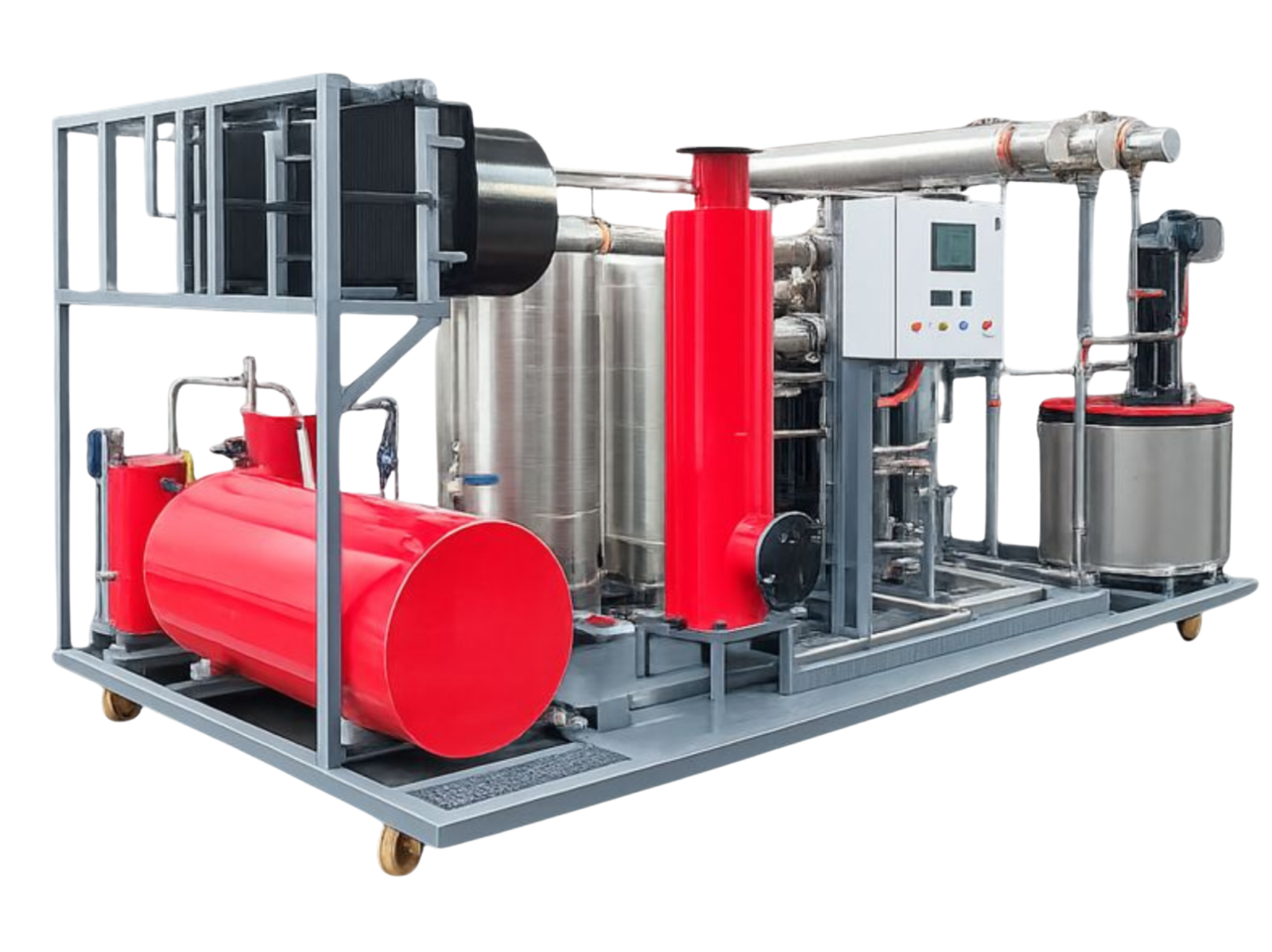
Veera Group’s catalog focuses on molecular distillation technology for converting compatible waste oil to diesel. The systems are designed to process used engine oil, hydraulic oil, gearbox oil and certain oils derived from tyre and plastic pyrolysis.
The process uses controlled heating, distillation, condensation, separation and filtration to produce the specified recovered output.
This distinction is important for buyers.
A person searching for a Lube Oil Recycling Plant may use the term to describe several different technologies, including filtration systems, reconditioning systems, re-refining plants and distillation-based recovery systems.
Therefore, before purchasing equipment, clearly define the product you want to produce.
If your project requires base oil re-refining, the required product specification and downstream refining process should be discussed with the manufacturer before selecting a machine.
If your objective is to recover fuel from compatible used oils, Veera’s molecular distillation systems provide a different processing route.


WHAT IS A LUBE OIL RECYCLING PLANT?
A Lube Oil Recycling Plant is an industrial processing system designed to treat used lubricating oils and recover useful components or products from them.
The exact recycling route depends on the feedstock, process technology and required final product.
Veera Group’s catalog focuses on molecular distillation technology for converting compatible waste oils into recovered diesel fuel. The systems are designed to process used engine oil, hydraulic oil, gearbox oil and certain oils derived from tyre and plastic pyrolysis.
The process uses controlled heating, distillation, condensation, separation and filtration to produce the specified recovered output.
This distinction is important for buyers.
A person searching for a What is used lubricating oil may use the term to describe several different technologies, including filtration systems, reconditioning systems, re-refining plants and distillation-based recovery systems.
Therefore, before purchasing equipment, clearly define the product you want to produce.
If your project requires base oil re-refining, the required product specification and downstream refining process should be discussed with the manufacturer before selecting a machine.
If your objective is to recover fuel from compatible used oils, Veera’s molecular distillation systems provide a different processing route.
HOW DOES A LUBE OIL RECYCLING PLANT WORK?
The process begins with the collection and preparation of compatible used oil.
1. Feedstock Preparation
Used oil is collected and prepared for processing. The condition of the feedstock is important because water, solids and other contaminants can affect processing performance.
The oil should therefore be evaluated before selecting the equipment.
2. Controlled Heating
The prepared oil enters the processing system and is heated under controlled operating conditions.
The objective is to separate useful components from unwanted materials through controlled thermal processing.
3. Molecular Distillation
Veera’s systems use molecular distillation technology as the core processing method.
The distillation stage allows different components of the processed oil to be separated based on their physical properties under the designed operating conditions.
4. Condensation and Cooling
The separated vapours are condensed through the integrated cooling arrangement.
The catalog describes systems with built-in water tanks and cooling systems, with chiller-based cooling specified for the continuous models.
5. Separation
The system incorporates diesel and water separation to help produce a more consistent recovered output.
6. Filtration
The catalog specifies a three-catalyst arrangement for the SC models, with catalysts A and B described as permanent and reusable, while catalyst C is used for final filtration at the stated dosage.
7. Recovered Product
The resulting product depends on the feedstock and the selected configuration.
Veera’s catalog describes its molecular distillation range as systems for converting waste oil into Lite Diesel Oil (LDO), with model-specific input and output specifications.
A properly selected Lube Oil Recycling Plant therefore needs to be evaluated as a complete process system rather than simply as a heating machine.
EXPLORE OUR RANGE OF HIGH-PERFORMANCE Lube Oil Recycling Plant
EXPLORE OUR RANGE OF HIGH-PERFORMANCE
Lube Oil Recycling Plant
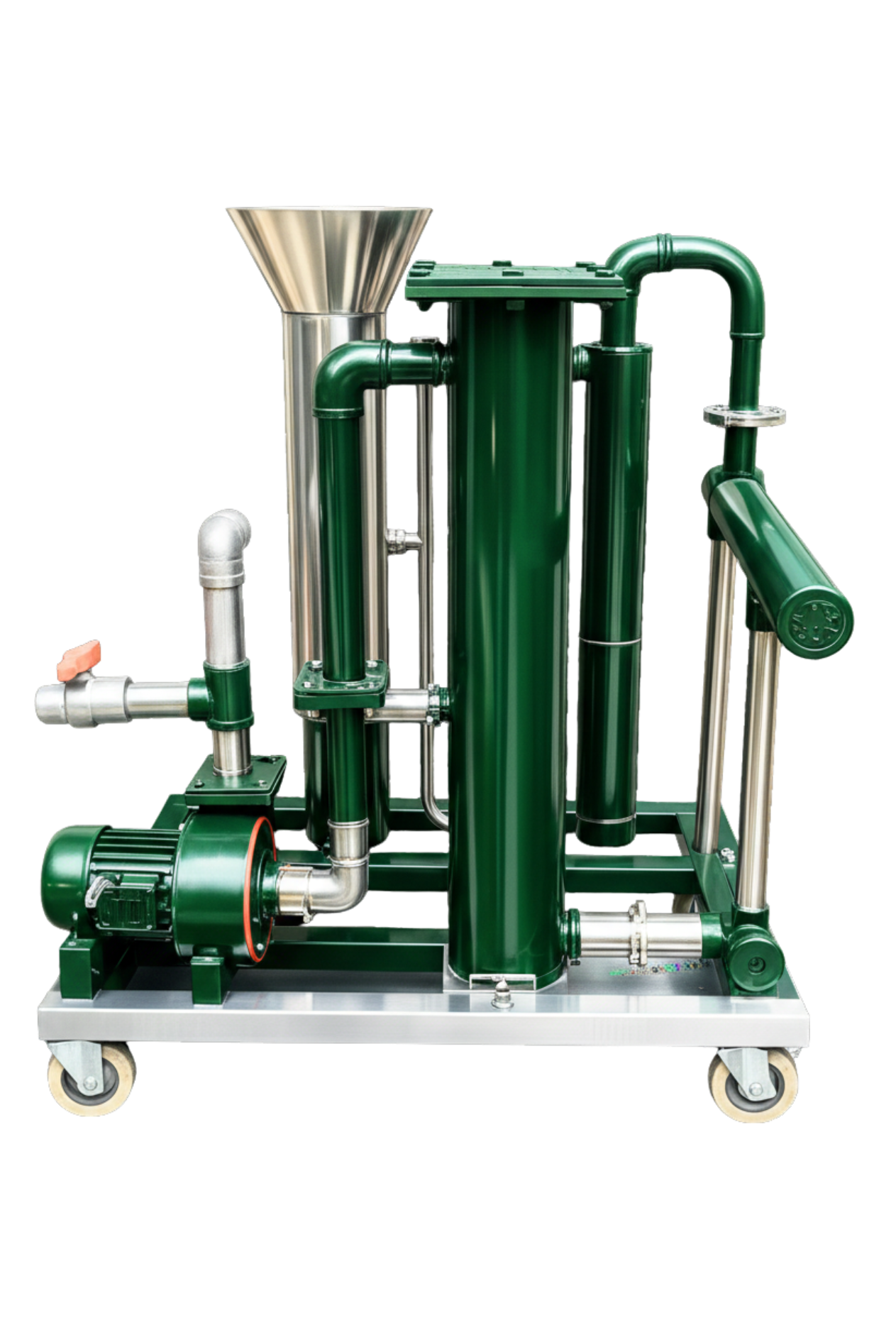
WASTE OIL TO
DIESEL MACHINE
Advanced industrial machines engineered for efficient waste oil recovery and high purity diesel output. Designed for scalable fuel production and stable industrial performance.
Get a Quote



WHAT SHOULD YOU CHECK BEFORE BUYING A LUBE OIL RECYCLING PLANT?
The machine price is only one part of the decision.
Before purchasing a Lube Oil Recycling Plant, ask the manufacturer about the complete system.
1. Feedstock Compatibility
Tell the manufacturer exactly what oil you have.
Do not simply say “waste oil.”
Provide information about whether it is:
- Engine oil
- Hydraulic oil
- Gearbox oil
- Industrial lubricant
- Pyrolysis oil
- A mixed waste-oil stream
2. Feedstock Quantity
Calculate how much oil you can actually collect.
A machine that is too large for your available feedstock may not be the most practical choice.
3. Water and Contamination
Ask how your particular feedstock should be prepared before processing.
Water, solids and other contaminants can influence processing requirements.
4. Required Output
Be clear about the product you want from the process.
A recycling project designed for fuel recovery is different from a project designed for producing re-refined base oil.
5. Operating Hours
Decide whether the plant will run for a few hours per batch or operate continuously for an extended daily period.
6. Energy Requirement
Review the electrical requirement of the selected model and confirm that the site can support it.
7. Cooling System
Ask what cooling arrangement is required and what utilities are needed at your site.
8. Installation Space
Check the machine dimensions, access route, storage requirements and space for feedstock and recovered products.
9. Automation and Monitoring
Ask what controls are included and what remote monitoring or operating features are available.
10. Maintenance and Support
A recycling plant is a long-term industrial investment.
Ask about maintenance, spare parts, technical assistance and operator requirements before placing an order.
A detailed quotation should clearly explain what is included in the Lube Oil Recycling Plant package.
UNDERSTANDING LUBE OIL RECYCLING IN DIFFERENT MARKETS
The need for used-oil recovery is not limited to one country.
The United States, India and the United Kingdom are important markets to consider when developing an international used-oil recycling strategy, and each market has its own environmental, storage, transportation and processing requirements.
United States
The United States has a mature used-oil management environment, with the U.S. Environmental Protection Agency providing specific requirements and guidance for businesses handling used oil. EPA states that used oil can be reconditioned, introduced into refinery processes or re-refined, depending on the recycling route.
For a U.S. project, selecting a Lube Oil Recycling Plant should therefore be combined with an assessment of applicable federal, state and local requirements.
The availability of used engine oil from automotive service businesses, fleet maintenance and industrial operations also makes feedstock planning an important part of project development.
India
India is an important market for used-oil recovery because of its large automotive, manufacturing, transport and industrial sectors.
India has also introduced an Extended Producer Responsibility framework for used oil. CPCB guidance states that the EPR framework for used oil came into force from 1 April 2024 and involves registered recyclers and EPR certificates.
For an Indian Lube Oil Recycling Plant project, buyers should therefore evaluate not only machine capacity but also applicable registration, recycling, collection and environmental requirements.
United Kingdom
The UK has established rules covering waste oils, oil storage and the processing of recovered oils.
UK government guidance recognizes waste oils from vehicle and industrial applications and notes that processing waste oil through heat or re-distillation can result in different regulatory requirements depending on the resulting product and process.
For a UK buyer, a Lube Oil Recycling Plant should therefore be evaluated together with the required environmental permissions, storage arrangements and product requirements applicable to the specific project.
International Projects
Beyond these markets, used-oil recycling opportunities exist wherever there is a reliable supply of compatible lubricating oil waste and a suitable market for the recovered product.
The important principle is the same:
Start with the feedstock, define the required output, understand the local requirements and then select the equipment.
WHY CHOOSE VEERA GROUP?

Choosing a Lube Oil Recycling Plant supplier is a long-term decision.
You are not only purchasing equipment.
You are choosing the technology, manufacturing support, technical communication and service relationship that will influence your project after the machine reaches your site.
Veera Group’s company material states that its waste-to-energy machinery operations began in 2013 and that its systems have been supplied to more than 53 countries.
The company also identifies ISO 9001:2015, ISO 14001:2015 and CE certification within its product and company material.
Product-Focused Technology
Veera’s molecular distillation range is designed around waste-oil processing and fuel recovery.
The systems incorporate features such as:
- Molecular distillation
- Controlled heating
- Cooling systems
- Water separation
- Diesel separation
- Filtration
- Reusable catalyst stages in specified models
- Remote monitoring capability
- Plug-and-play system design
Multiple Capacities
The range extends from compact batch configurations to larger continuous systems.
This allows the equipment discussion to begin with the buyer’s actual feedstock volume rather than forcing every project into one standard plant configuration.
International Experience
Veera Group’s experience across international markets provides a basis for discussing projects with different operating environments and feedstock conditions.
For an international Lube Oil Recycling Plant project, the machine should still be evaluated against the specific requirements of the destination country.
Project-Based Selection
A good supplier should not simply ask:
“Which machine do you want?”
The better question is:
“What oil do you have, how much can you supply, what output do you need, and how do you plan to operate the system?”
That is the approach Veera Group can take when evaluating a project.
A LUBE OIL RECYCLING PLANT SHOULD BE SELECTED AROUND YOUR BUSINESS
The biggest machine is not automatically the best machine.
If your business collects 50 litres of compatible waste oil at a time, a compact batch system may be more practical than purchasing a much larger continuous system.
If your operation has a consistent supply of several thousand litres of waste oil, a continuous configuration may be more appropriate.
Your decision should consider:
Feedstock → Capacity → Operating hours → Energy → Cooling → Output → Site → Compliance → Support
This simple chain can prevent a common mistake: choosing equipment based only on a brochure specification.
The right Lube Oil Recycling Plant is the one that fits your actual waste-oil supply and your intended production model.
READY TO DISCUSS YOUR LUBE OIL RECYCLING PROJECT?
If you already have a reliable source of used lubricating oil, the next step is to understand your feedstock and production requirement.
Share details such as:
- Type of waste oil
- Approximate quantity available per day
- Current storage capacity
- Desired operating hours
- Required output
- Country of installation
- Available electrical supply
- Available installation space
Veera Group can then help identify a suitable molecular distillation configuration for your project.
Whether you are planning a small recovery operation or a larger commercial facility, the equipment should be selected around the reality of your feedstock—not simply around a catalogue number.
FAQs
What is a Lube Oil Recycling Plant?
A Lube Oil Recycling Plant is an industrial system used to process compatible used lubricating oils and recover useful products from them. Veera Group's current molecular distillation range is designed to process specified waste oils into recovered Lite Diesel Oil (LDO).
What types of oil can be processed?
Veera's catalog identifies used engine oil, hydraulic oil, gearbox oil and certain oils derived from tyre and plastic pyrolysis as compatible waste-oil streams. Feedstock suitability should be confirmed for each project.
How does molecular distillation work?
Molecular distillation uses controlled thermal separation to separate components of a feedstock according to their physical properties. In Veera's systems, the process includes heating, condensation, cooling, separation and filtration stages.
Does Veera manufacture the equipment?
Yes. Veera Group's company material identifies its operations as manufacturing and exporting waste-to-energy machinery, including waste-oil distillation systems.
How much does a Lube Oil Recycling Plant cost?
The price depends on the model and project configuration. Veera's current catalog lists individual model prices, but international projects can involve customization, transport, taxes and other project-specific costs.
BOOK A FREE CALL
Markeshwaran M│ Co-Founder & Technical SEO Lead │ Beyond Digital Marketing Agency
Markeshwaran specializes in industrial SEO, technical SEO, and B2B website optimization for manufacturing, renewable energy, and industrial businesses.
https://www.linkedin.com/in/markeshwaran-m-448777284/

 Waste Oil to Diesel Machine
 Biomass Gasifier