
What Is Used Cooking Oil Biodiesel is a question that comes up when restaurants, food-processing businesses, commercial kitchens and recycling operators look for a productive use for used cooking oil. Used cooking oil can be processed through a controlled chemical conversion process to produce biodiesel, a fuel that can be used in suitable diesel engines, generators, agricultural machinery, commercial vehicles and industrial applications.
In simple terms, What Is Used Cooking Oil Biodiesel can be explained as biodiesel produced from previously used cooking oil rather than relying only on fresh oil as a feedstock.
Used cooking oil contains fats and oils that can be converted into biodiesel when the material is properly prepared and processed. The quality of the incoming oil, its water content and the processing conditions all influence the final product.
For businesses considering this type of resource-recovery project, understanding What Is Used Cooking Oil Biodiesel is the first step before looking at processing capacity, equipment and production requirements.

WHERE DOES THE USED COOKING OIL COME FROM?
To understand What Is Used Cooking Oil Biodiesel, start with the material that enters the process.
Used cooking oil, often called UCO, is generated after vegetable oils or other cooking oils have been used in food preparation. Instead of allowing this oil to become a disposal problem, it can be collected and directed toward further processing.
Common sources include:
- Restaurants
- Hotels
- Commercial kitchens
- Food-processing facilities
- Catering operations
- Food industries
- Other businesses that generate used cooking oil
The available feedstock can vary considerably from one collection source to another. Oil may contain food particles, water and other contaminants, which is why preparation is an important part of the overall process.
This also explains why What Is Used Cooking Oil Biodiesel is not simply a matter of putting waste oil into a machine. The feedstock needs to be appropriate for the selected process.
WHAT CHANGES IN COOKING OIL AFTER USE?
A useful way to understand What Is Used Cooking Oil Biodiesel is to look at how cooking oil changes during repeated heating and use.
During cooking, the oil is exposed to heat, food materials and moisture. Over time, its physical and chemical characteristics can change. The collected oil may therefore contain unwanted water and suspended particles.
For biodiesel production, these contaminants need to be considered before the conversion stage.
Water is particularly important because Veera’s listed biodiesel systems specify an acceptable water content of less than 2%.
Therefore, What Is Used Cooking Oil Biodiesel also involves understanding the condition of the raw material before it enters the production system.
HOW IS USED COOKING OIL CONVERTED INTO BIODIESEL?
The answer to What Is Used Cooking Oil Biodiesel becomes clearer when the conversion process is understood.
The core process used for biodiesel production is called transesterification.
In a simplified flow, the process can be represented as:
USED COOKING OIL → PREPARATION → REACTION → SEPARATION → FILTRATION → BIODIESEL
The prepared oil undergoes a controlled reaction in which the oil is converted into biodiesel. A catalyst is used during the process, followed by separation and purification stages.
Veera’s biodiesel systems incorporate a proprietary catalyst, water tank, cooling system and filtration system. The catalog also specifies a transesterification process and an optional methanol recovery system with de-watering functionality.
This controlled sequence is central to understanding What Is Used Cooking Oil Biodiesel because the objective is not merely to heat or filter used oil, but to chemically convert suitable oil into biodiesel.
WHAT HAPPENS AFTER THE BIODIESEL REACTION?
Another important part of What Is Used Cooking Oil Biodiesel is what happens after the main reaction.
Once the conversion takes place, the resulting material needs further processing to obtain the desired biodiesel output. Separation, filtration and related treatment steps help remove unwanted components and improve the quality of the finished product.
Glycerine is also produced as a co-product. Veera’s listed biodiesel systems specify a glycerine yield of approximately 10–12%.
The biodiesel output listed for the Veera systems has a density range of 850–870, according to the catalog specifications.
Understanding these outputs gives a more complete picture of What Is Used Cooking Oil Biodiesel and how the process handles the original cooking-oil feedstock.
HOW MUCH BIODIESEL CAN USED COOKING OIL PRODUCE?
The production quantity depends on the processing system and operating conditions.
Veera currently lists three batch biodiesel configurations:
| MODEL | BIODIESEL OUTPUT | PROCESSING TIME |
|---|---|---|
| BD200 SC | 180 litres/batch | 5–6 hours |
| BD500 SC | 450 litres/batch | 5–6 hours |
| BD1000 SC | 900 litres/batch | 5–6 hours |
The catalog specifies an overall biodiesel yield range of 85–90% for these systems.
For someone researching What Is Used Cooking Oil Biodiesel, production capacity should therefore be considered alongside the amount of UCO available every day or every batch.
A business generating only a small quantity of used cooking oil may not require the same processing capacity as a large food-processing operation collecting UCO from multiple sources.
WHAT IS BIODIESEL USED FOR?
Once we understand What Is Used Cooking Oil Biodiesel, the next question is where the resulting fuel can be used.
Veera identifies several potential applications for its biodiesel output:
DIESEL ENGINES
Biodiesel can be used in suitable diesel-engine applications.
GENERATORS
The fuel can be relevant to suitable generator systems designed or approved for biodiesel use.
AGRICULTURAL MACHINERY
Farming and agricultural equipment can be another potential application where the fuel specification and equipment requirements are compatible.
COMMERCIAL VEHICLES
Biodiesel can also be used in suitable commercial transportation applications.
INDUSTRIAL APPLICATIONS
Industries using diesel-based equipment may evaluate biodiesel as part of their fuel strategy, subject to equipment compatibility and applicable fuel standards.
The catalog specifically identifies diesel engines, generators, agricultural machinery, commercial vehicles and industrial applications as potential biodiesel uses.
WHY DOES FEEDSTOCK QUALITY MATTER?
If someone asks What Is Used Cooking Oil Biodiesel, feedstock quality should always be part of the answer.
Two batches of used cooking oil may look similar but have different levels of water, food particles and other contaminants. These differences can affect preparation and processing.
Before choosing a system, it is useful to understand:
- How much UCO is collected
- Where the oil comes from
- Its typical water content
- The amount of solid contamination
- How consistently the feedstock is available
- Whether other oils will be processed alongside UCO
Veera Group systems list used cooking oil alongside vegetable oil, animal fat and non-edible vegetable oils such as jatropha oil as possible raw materials.
The actual feedstock should still be evaluated against the intended processing system rather than assuming every collected oil will behave identically.
WHAT EQUIPMENT IS NEEDED TO MAKE BIODIESEL FROM USED COOKING OIL?
Understanding What Is Used Cooking Oil Biodiesel naturally leads to the equipment question.
A complete processing setup needs to address the different stages involved in converting the raw oil into usable biodiesel.
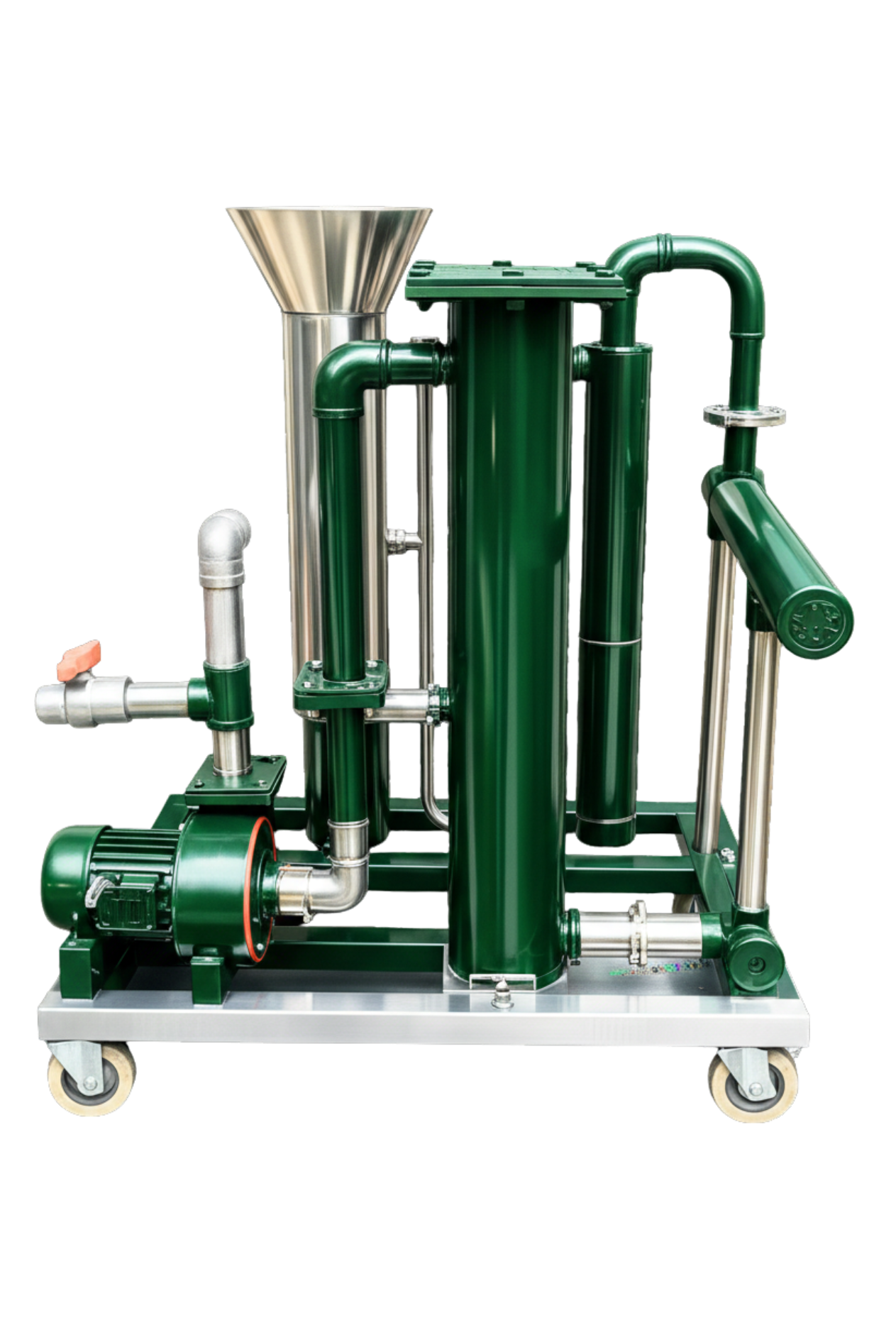
A Biodiesel Processing Equipment system can incorporate functions such as:
- Feedstock preparation
- Controlled reaction
- Heating
- Cooling
- Water management
- Separation
- Filtration
- Biodiesel collection
- Glycerine separation
- Optional methanol recovery
Veera’s listed systems are batch-operated and include integrated water and cooling systems, filtration and other process components.
The correct Biodiesel Processing Equipment should be selected according to the available UCO quantity, desired production volume, operating method and site requirements.
HOW DOES A SMALL BIODIESEL SYSTEM DIFFER FROM A LARGER ONE?
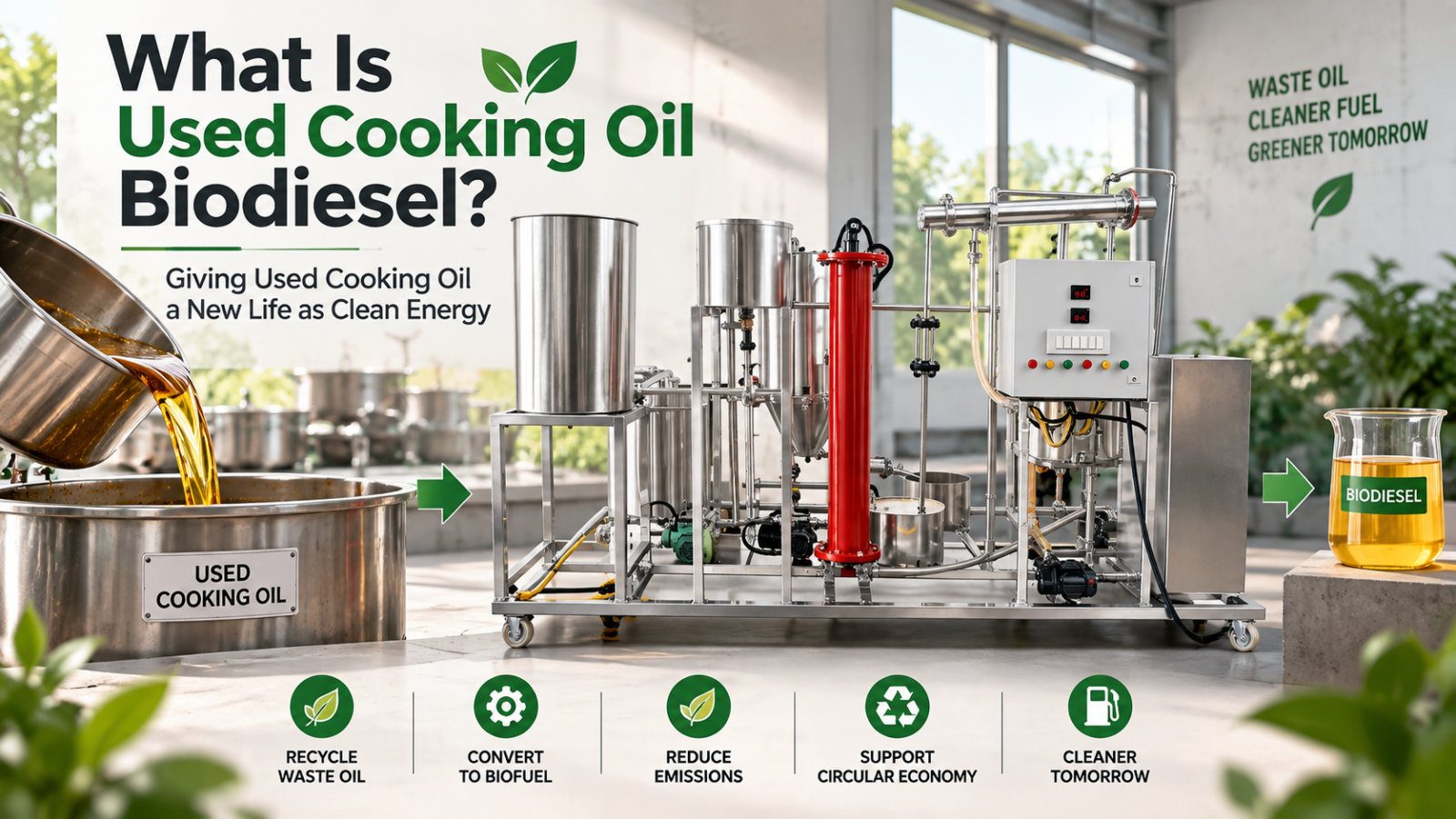

The concept behind What Is Used Cooking Oil Biodiesel remains the same regardless of machine size, but the production capacity changes.
The BD200 SC is listed with 180 litres per batch and 5 kW electrical consumption. The BD500 SC increases the listed output to 450 litres per batch with 9 kW electrical consumption, while the BD1000 SC provides 900 litres per batch with 13 kW electrical consumption.
This makes capacity planning important. The best option is not automatically the largest machine; it should match the actual feedstock supply and production requirement.
FROM USED COOKING OIL TO A NEW FUEL RESOURCE
The complete idea behind What Is Used Cooking Oil Biodiesel can be summarized in one simple chain:
USED COOKING OIL
↓
COLLECTION
↓
PREPARATION
↓
TRANSESTERIFICATION
↓
SEPARATION & FILTRATION
↓
BIODIESEL
Instead of treating used cooking oil only as a waste material, the oil can become a feedstock for fuel production when the appropriate processing conditions are available.
For businesses exploring Biodiesel Processing Equipment, the important decision is to connect the available UCO supply with a machine capacity and process configuration that suits the intended production requirement.
Veera’s biodiesel range is designed around batch processing of used cooking oil, with listed systems from 180 litres to 900 litres of biodiesel output per batch.
FREQUENTLY ASKED QUESTIONS
What Is Used Cooking Oil Biodiesel?
What Is Used Cooking Oil Biodiesel refers to biodiesel produced by processing suitable used cooking oil through a controlled conversion process, typically involving transesterification.
Is used cooking oil suitable for biodiesel production?
Yes, suitable used cooking oil can be used as a biodiesel feedstock. However, its condition, water content and contaminants should be evaluated before processing.
What is UCO in biodiesel production?
UCO means Used Cooking Oil. It is cooking oil collected after use from sources such as restaurants, hotels, commercial kitchens and food industries.
How is used cooking oil turned into biodiesel?
Used cooking oil is prepared and processed through a controlled transesterification process, followed by separation and filtration to obtain biodiesel.
What is the typical biodiesel yield?
Veera’s listed biodiesel systems specify a biodiesel yield range of approximately 85–90%.
Does biodiesel production also produce glycerine?
Yes. Veera’s catalog lists glycerine yield at approximately 10–12% for its biodiesel systems.
How much water can the raw material contain?
Veera’s listed systems specify acceptable water content below 2%.
What is the processing time?
The listed BD200 SC, BD500 SC and BD1000 SC systems specify approximately 5–6 hours per batch.
Can biodiesel be used in generators?
Biodiesel can be relevant to suitable generator systems, and Veera identifies generators beyond the applications for its biodiesel output. Equipment compatibility and applicable fuel requirements should be checked before use.
What should I check before buying Biodiesel Processing Equipment?
Check the quantity and quality of available used cooking oil, water content, required biodiesel output, batch size, processing time, electrical requirements and the features needed for your project.
What Is Used Cooking Oil Biodiesel useful for?
Used Cooking Oil Biodiesel is useful when suitable used cooking oil is available as a feedstock and there is a practical requirement for biodiesel as a fuel resource. The resulting biodiesel can have applications in suitable diesel engines, generators, agricultural machinery, commercial vehicles and industrial equipment.

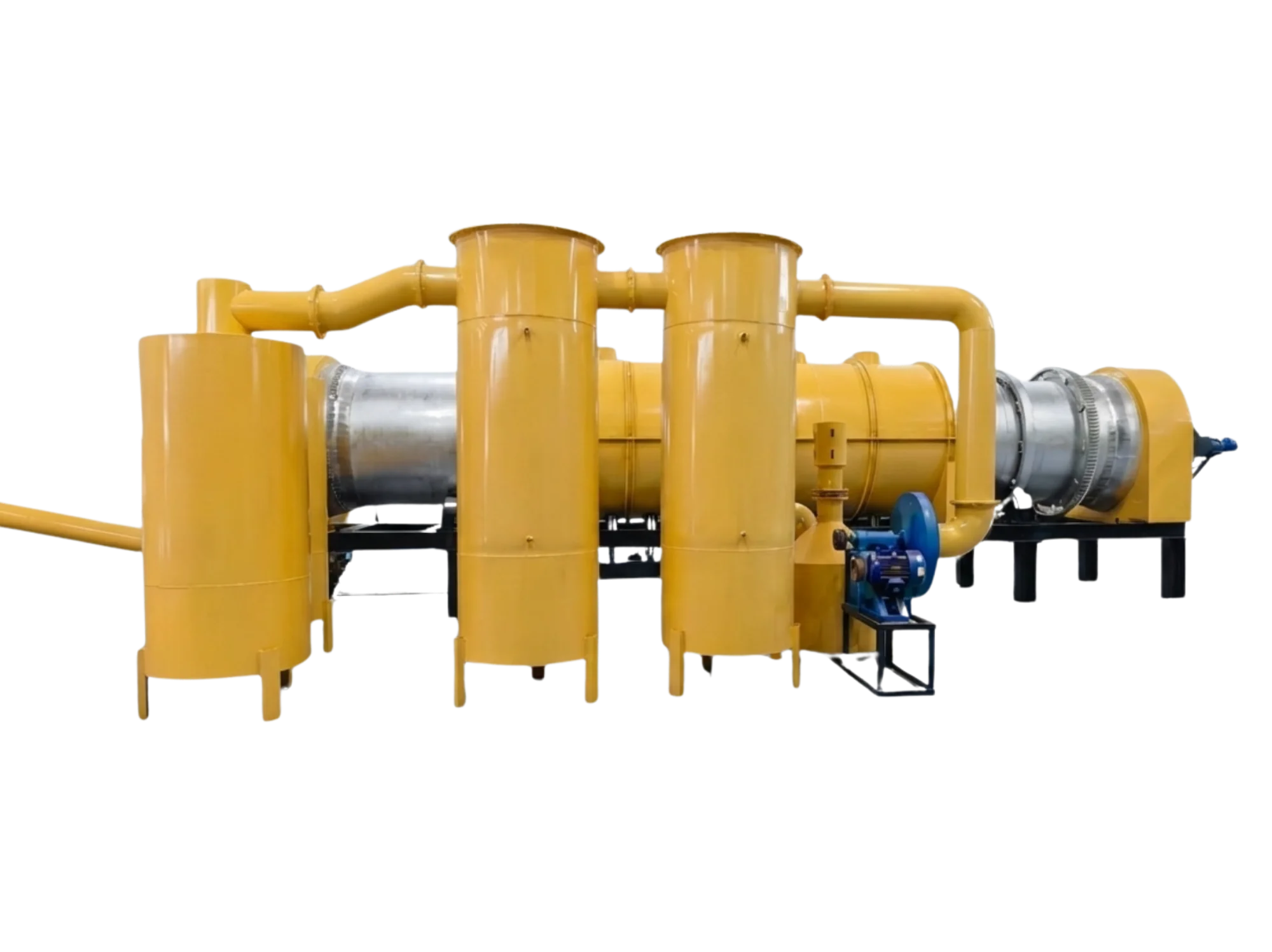
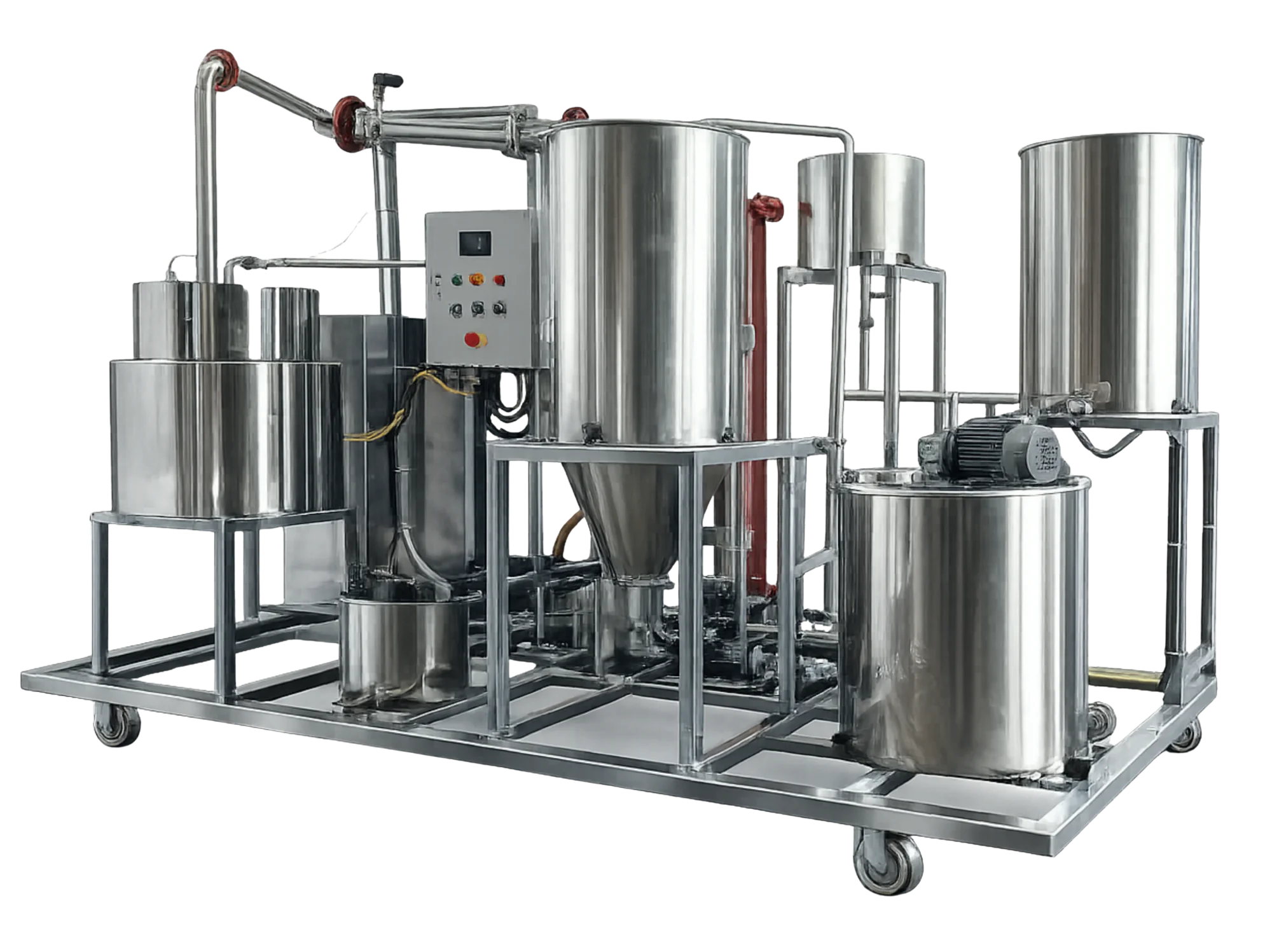
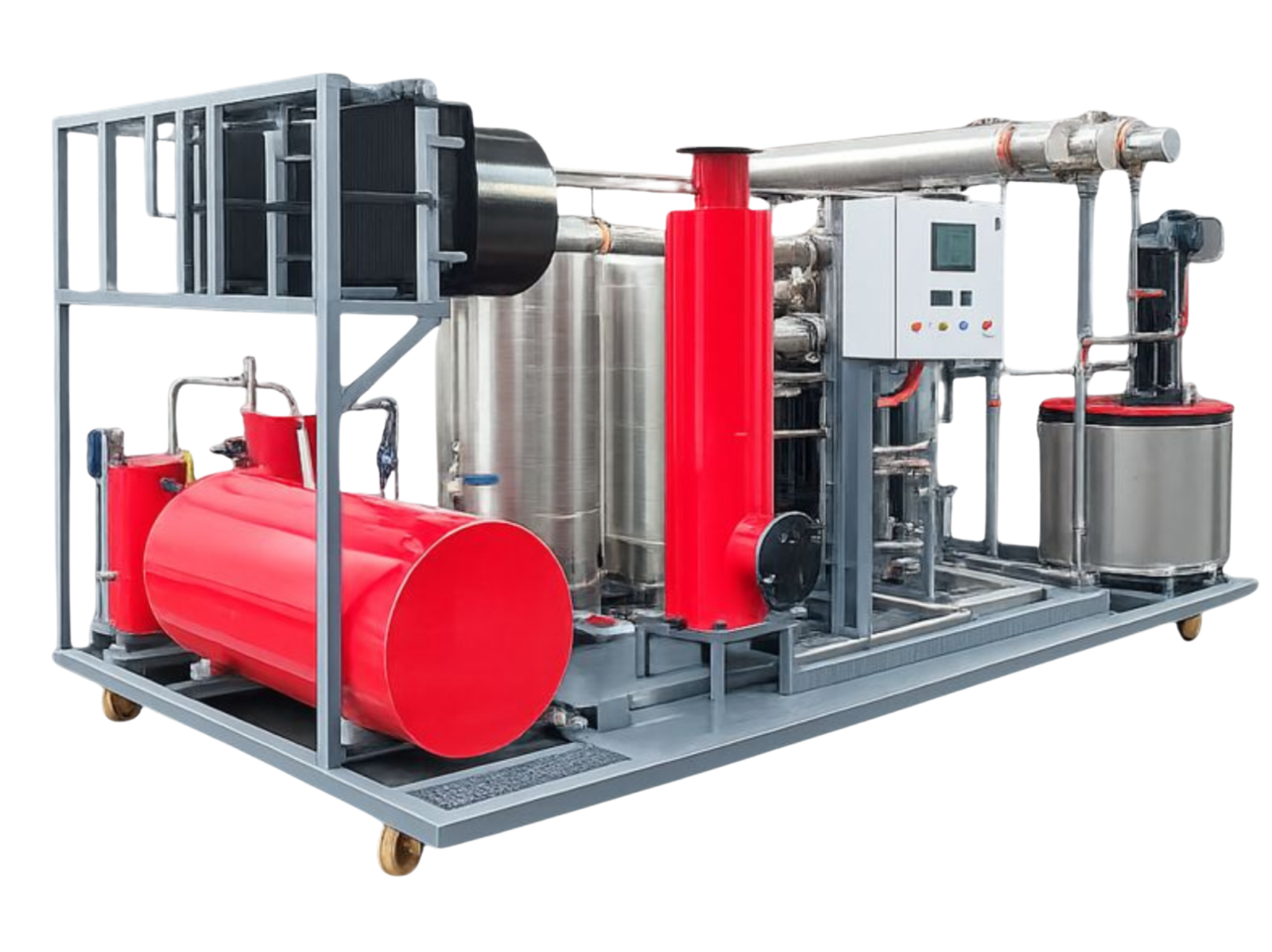 Waste Oil to Diesel Machine
 Biomass Gasifier